LBX viscous-food selection
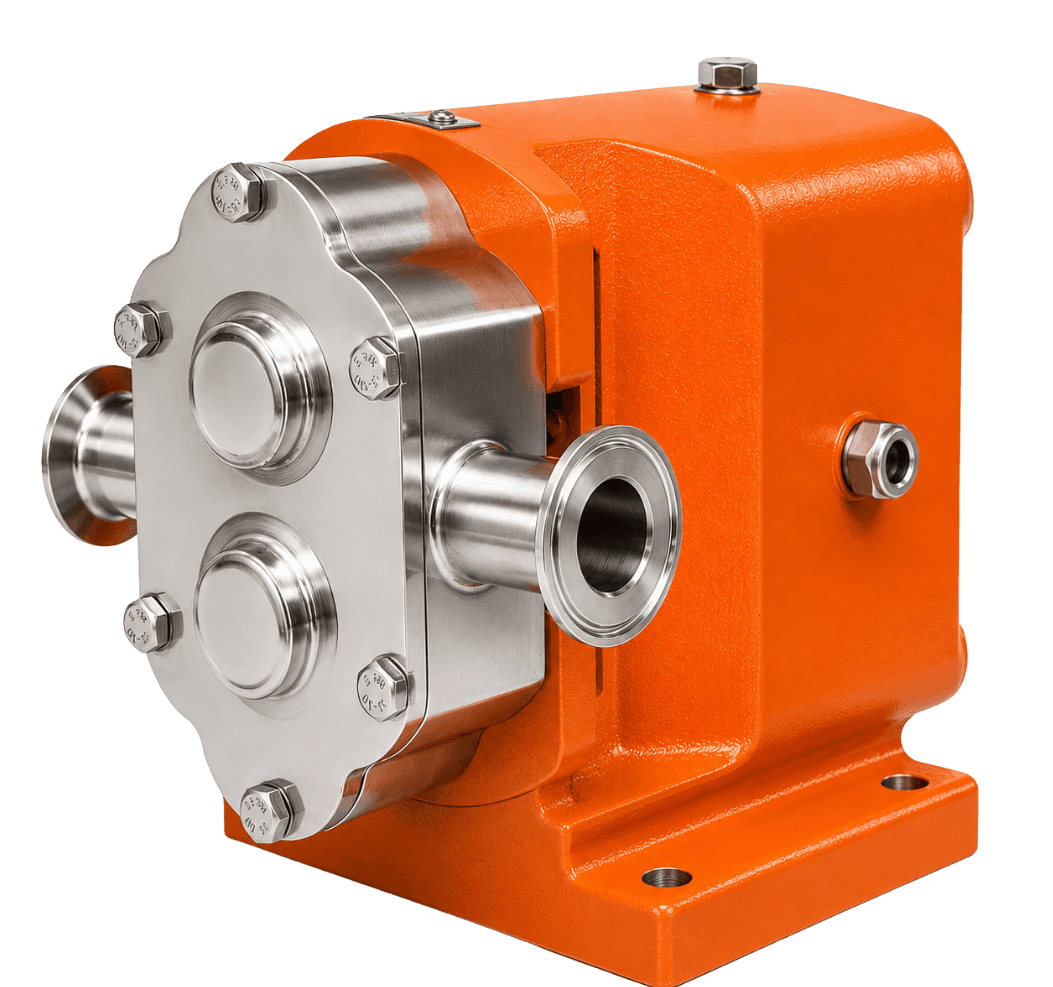
Food Grade Lobe Pump for Viscous Product Transfer
A food-duty lobe pump is normally reviewed when cream, yogurt, thick syrup, sauce, paste or another product is too viscous or shear-sensitive for straightforward centrifugal transfer. Shubham’s LBX Series provides the positive displacement starting point, while the supplied materials, seal, connection, cleaning arrangement, speed and pressure must match the actual product.
Product behaviour
Why positive displacement is reviewed for thick food products
LBX moves a defined volume through the pump as the rotors turn. That principle supports controlled transfer when viscosity, texture or solids make a high-velocity impeller route unsuitable. It does not remove the need to check inlet filling, speed, pressure, torque and seal compatibility.
| Product | Handling concern | Starting route | Duty data to provide |
|---|---|---|---|
| Cream | Viscosity, texture and transfer temperature | LBX starting route | Viscosity at operating temperature, flow, pressure, suction and cleaning |
| Curd base or yogurt | Shear sensitivity, consistency and possible solids | LBX after product review | Consistency, solids, particle size, flow, pressure and desired texture |
| Thick syrup | Viscosity changes with temperature and controlled flow | LBX within verified duty limits | Viscosity-temperature data, suction, pressure, line size and heating condition |
| Sauce or tomato paste | Paste viscosity, seeds or particles and product damage | LBX after solids review | Particle size, abrasiveness, viscosity, pressure, seal and cleaning |
| Jam or fruit filling | Soft solids and product structure | LBX candidate | Fruit pieces, maximum particle size, viscosity, speed sensitivity and discharge pressure |
| Confectionery or edible paste | High viscosity, temperature and inlet filling | LBX subject to torque and suction review | Operating temperature, viscosity, flow, suction, line loss and drive requirement |
Food-contact review
A food-grade request is a configuration question
Verified LBX data lists an AISI 316 pump head, rotors and shaft, sanitary connection options, and single mechanical seal, double mechanical seal or gland packing choices. The buyer must identify which supplied combination is compatible with the product and cleaning process.
Do not infer FDA, 3-A, EHEDG, GMP, surface-finish or elastomer certification from the phrase “food grade.” If a project requires specific documents or acceptance criteria, state them in the inquiry and require confirmation in the quotation.
For an application-specific dairy review, continue to the cream transfer guide or the ghee duty guide.
For food-line sizing, compare the two-route syrup review with the sauce solids and texture review.
Liquid chocolate needs a temperature and inlet review; mayonnaise needs an emulsion acceptance review before an LBX quotation.
Sizing worksheet
Eight inputs that control viscous food transfer
| Input | What to provide | Why it changes the pump selection |
|---|---|---|
| Viscosity | Value at the actual pumping temperature, not a room-temperature estimate | Controls speed, torque, suction filling and pressure loss. |
| Shear sensitivity | Whether mixing changes texture, emulsion, viscosity or appearance | Determines how gently the product must be displaced. |
| Solids | Type, concentration, maximum size, softness and abrasiveness | Affects clearance, rotor, speed, wear and product damage. |
| Temperature | Normal, start-up and cleaning temperatures | Changes viscosity and affects seal, elastomer and material selection. |
| Flow and pressure | Required transfer rate plus discharge pressure or total head | Sizes the pump, speed, drive and line-loss allowance together. |
| Suction | Tank level, inlet size, distance, fittings and any lift | Thick products require careful inlet filling and low suction loss. |
| Cleaning | CIP or manual method, chemistry, cycle and drainage expectation | Shapes connection, seal and supplied cleaning arrangement. |
| Product-contact build | MOC, rotor, seal, elastomer and connection requirements | Must be compatible with both product and cleaning chemistry. |
Technology boundary
When LBX may not be the appropriate starting point
Thin hygienic liquid
A clear, lower-viscosity product may be handled more appropriately by the SCS sanitary centrifugal route. Compare flow and total head before specifying a positive displacement pump.
Unknown solids or compatibility
Abrasive solids, incompatible cleaning chemistry, poor suction conditions or an undefined seal requirement can rule out a proposed build. Review the verified LBX product page and send the complete duty.
The Ahmedabad rotary lobe pump page serves local commercial intent; this page focuses on food-product behaviour and selection inputs.
Selection support
Describe the food product as it behaves in the line
Send viscosity at operating temperature, flow, pressure or head, suction, solids and particle size, cleaning method, connection, MOC, seal and elastomer requirements, motor or drive needs and quantity for LBX review.
Common questions
Food product lobe pump questions
When is a lobe pump considered for food product transfer?
A lobe pump is considered when the product is viscous, thick, paste-like, higher in solids or sensitive to shear and needs positive displacement transfer. The actual viscosity, temperature, flow, pressure, suction condition, solids and cleaning method must be confirmed.
Can LBX be reviewed for cream, yogurt, sauce and thick syrup?
Yes. Verified LBX data lists cream, yogurt or curd base, sauce, paste and thick syrup applications. Suitability remains conditional on product viscosity at operating temperature, solids, required pressure, suction, seal compatibility and cleaning method.
Does a food-grade description confirm every product-contact requirement?
No. Buyers must still confirm the supplied wetted material, rotor material, seal and elastomer compatibility, connection, cleaning method and any documentation required by their process. Do not infer a certification that is not stated in the quotation.
What solids information is needed for lobe pump selection?
Provide the solids type, concentration, maximum particle size, whether particles are soft or abrasive, and whether their shape must be preserved. These details affect rotor clearance, speed, pressure and product-handling review.
Which seal options are listed for LBX?
Verified LBX data lists single mechanical seal, double mechanical seal and gland packing options. The final choice depends on the product, viscosity, temperature, abrasiveness, cleaning method, leakage tolerance and material compatibility.
When should SCS be reviewed instead of LBX?
Review SCS for compatible lower-viscosity hygienic liquids where centrifugal transfer is appropriate. Milk, whey, clear beverages and similar thin products may not need a rotary lobe pump when flow, head, suction and cleaning requirements fit SCS.