Application selection
Chocolate Transfer Pump for Heated Process Lines
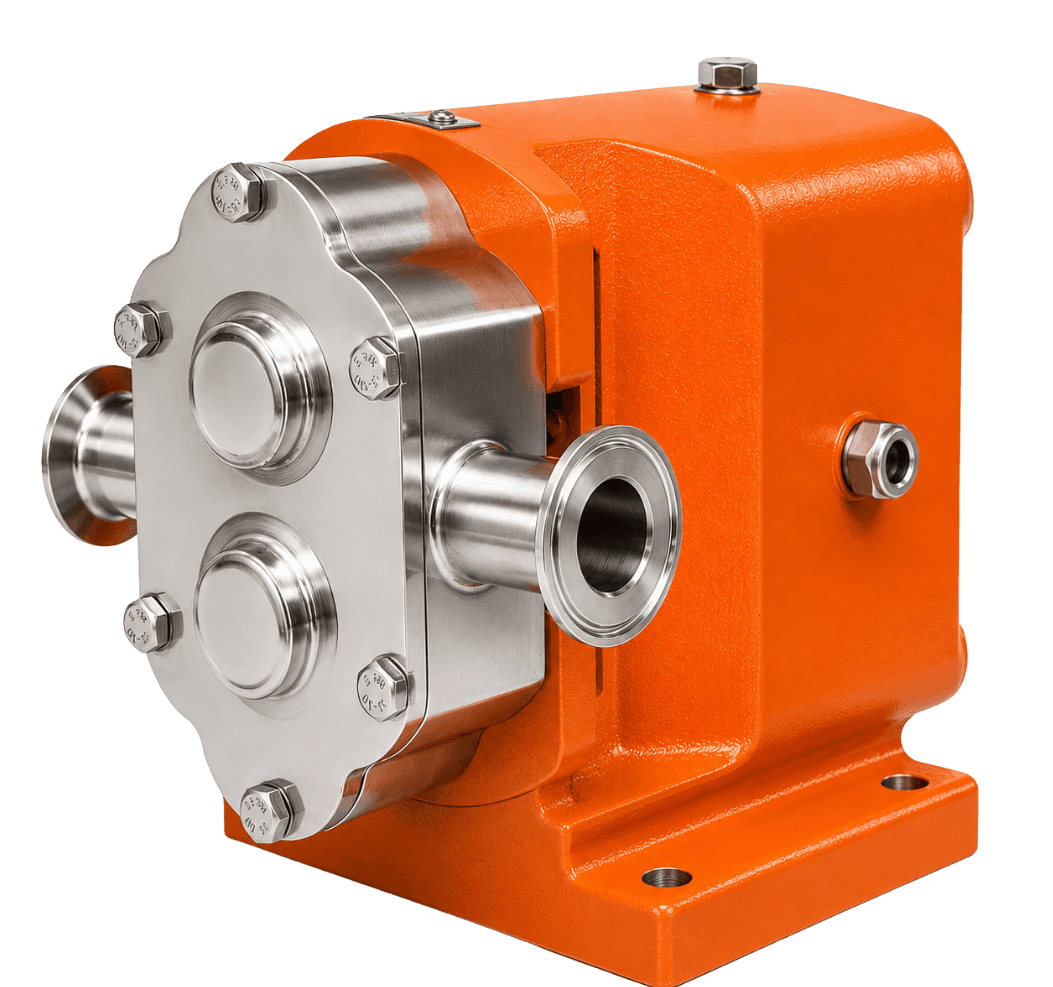
Liquid chocolate transfer is a temperature-dependent duty. Shubham’s LBX rotary lobe series is a starting route when the product is viscous and a controlled positive-displacement flow is required. Specify viscosity at actual start-up and transfer temperatures, inlet supply, line resistance, target flow, cleaning and seal requirements. The proposed build must be reviewed against the particular formulation.
Product behaviour
Size for the coldest permitted operating condition
A chocolate line can present a different load before steady transfer than after the product and pipework reach their intended operating temperature. Give the plant's permitted start-up temperature, normal transfer temperature and viscosity at both points. State whether the line is temperature controlled; do not assume a particular heated or jacketed LBX configuration is available without quotation confirmation.
Check the entire warm-product path
An LBX model cannot be chosen from kettle temperature alone. Product may cool in the inlet, pump or discharge pipe, increasing resistance and changing suction filling. Confirm the actual pipe arrangement, receiving pressure and seal environment. A formulation outside the verified LBX duty needs another selection review.
Selection table
Chocolate conditions that set the difficult duty
Provide measured conditions rather than a generic description such as melted or thick.
| Condition | Plant data | Selection consequence |
|---|---|---|
| Start-up after a hold | Product and line temperatures, hold time | Possible inlet and torque constraint |
| Normal transfer | Viscosity at operating temperature and required flow | Pump displacement and drive review |
| Cooling along the route | Temperatures at source and destination | Change in viscosity and line resistance |
| Product sensitivity | Acceptable change in appearance or structure | Handling speed and number of passes |
| Cleaning changeover | Actual cleaning method and liquid | Seal, connection and product-contact review |
System review
Account for pressure beyond the vessel outlet
The route to a depositor or holding tank can govern the duty even when the source tank is nearby.
| Circuit element | Data to provide | Why it matters |
|---|---|---|
| Vessel outlet | Minimum level, opening and inlet length | Available feed to the pump |
| Pipe or hose | Bore, length, bends and temperature control | Viscous friction loss |
| Receiving equipment | Required pressure, valves and cycling | Maximum discharge condition |
| Seal area | Product and cleaning temperatures | Compatibility and cleaning access |
Related guidance
Continue the technical review
Use the LBX data for the series construction and the food lobe guide for broader viscous-product selection. The syrup page gives a useful comparison of how temperature-driven viscosity can change a pump decision, although chocolate must be assessed as its own formulation.
Read the temperature-sensitive syrup review. Compare the approach to viscosity changes along a heated line.
Read the LBX product data, application pillar, sanitary technology guide, SCS centrifugal guide and LBX food guide. Use the pump selector for early screening.
Selection support
Send the chocolate transfer duty for review
Send chocolate formulation or sample, viscosity at start-up and operating temperature, permitted temperature range, target flow, discharge pressure, minimum tank level, inlet and outlet line dimensions, product sensitivity, cleaning method, seal, connection, drive and quantity.
Common questions
Chocolate transfer questions
Why provide chocolate viscosity at two temperatures?
The start-up and steady-transfer conditions may demand different inlet and drive performance. Report viscosity with the test temperature and method for each relevant condition.
Does an LBX quotation include a heated pump or line?
Do not assume a heating arrangement. State the plant's temperature-control requirement and ask Shubham to confirm the exact supplied configuration and interfaces.
What determines discharge pressure in a chocolate line?
Include pipe bore and length, bends, elevation, valves and receiving-equipment back pressure at the specified temperature and flow. These define the resistance to review.
Can one setting cover transfer and recirculation?
Each operating point needs checking, including flow, pressure, temperature and acceptable product change after repeated passes. Send both duties with the enquiry.