Application selection
Sauce Transfer Pump for Viscous Food Products
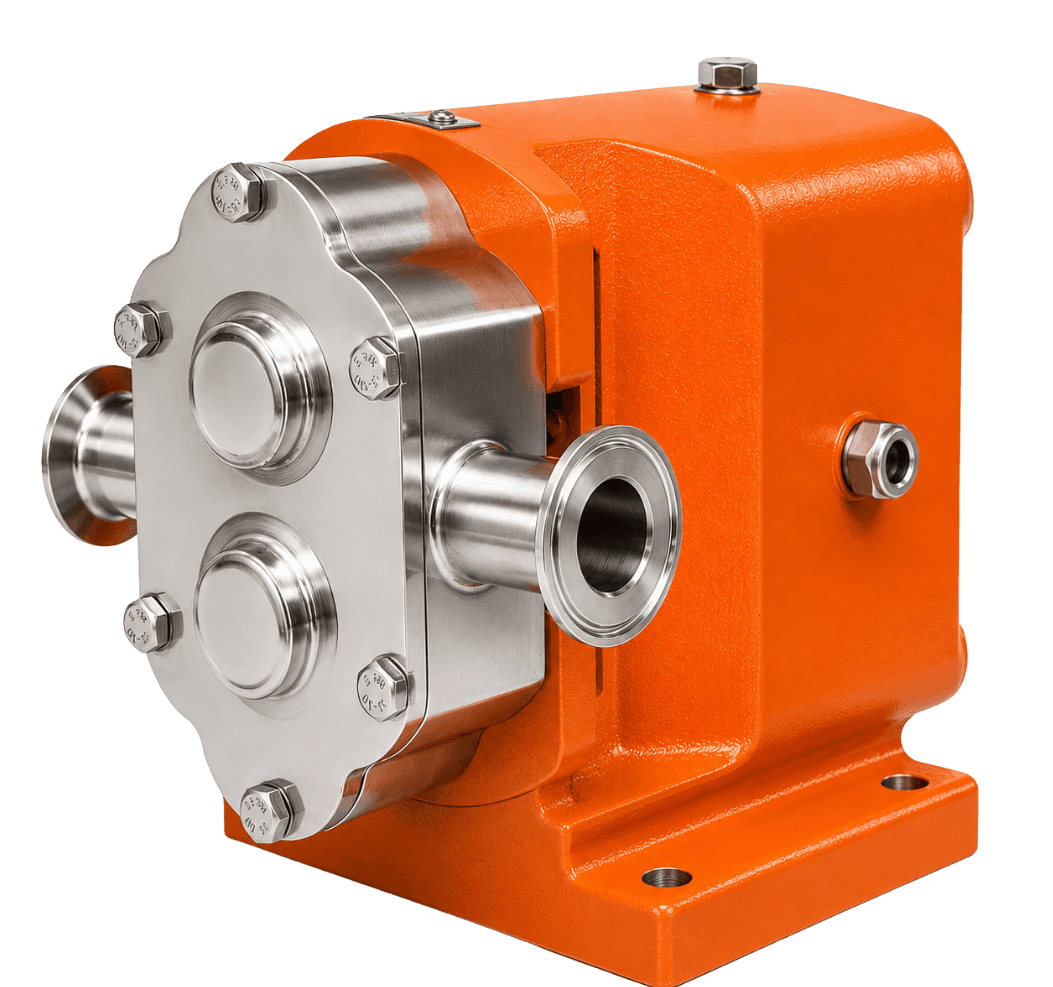
A thick sauce transfer duty often begins with Shubham’s LBX rotary lobe pump because viscosity, pieces and texture can make centrifugal handling unsuitable. The final configuration depends on the sauce at operating temperature, particle size and abrasiveness, required flow, discharge pressure, suction layout, cleaning method and product-contact seal. A thin, smooth sauce may warrant a centrifugal review.
Product behaviour
Describe the sauce, including its pieces
A smooth sauce, a seeded puree and a sauce containing larger pieces present different rotor-clearance and inlet questions. Record the largest particle, its concentration and whether pieces must remain intact. Do not assume that a pump suitable for one sauce recipe suits another batch.
Review solids and seal compatibility before quoting
Particle size, abrasiveness and cleaning chemistry can change the appropriate rotor and seal arrangement. The LBX series is the starting technology for viscous sauce, but the proposed build needs confirmation against the exact recipe and operating pressure.
Selection table
Sauce characteristics that change the selection
Collect recipe behavior and line conditions together; a viscosity figure alone does not describe a particulate sauce.
| Sauce characteristic | Evidence to provide | Pump review |
|---|---|---|
| Thickness at processing temperature | Viscosity or representative sample | Inlet filling, speed and drive |
| Particles, seeds or fibres | Maximum size, amount and abrasiveness | Rotor passage, wear and seal review |
| Texture sensitivity | Acceptable change after pumping | Handling speed and number of passes |
| Hot transfer or cooling | Temperature at source and receiving end | Viscosity shift and seal conditions |
| Acidity and cleaning chemistry | Product pH and cleaning liquid | Wetted material and elastomer compatibility |
System review
Locate the pressure and suction constraints
The same recipe may run differently from a kettle to a holding tank than from a tank to a filler.
| Transfer step | Likely constraint | Information needed |
|---|---|---|
| Kettle outlet | Changing level and temperature | Minimum level, outlet and inlet pipe sizes |
| Long transfer line | Viscous pressure loss | Line length, bends, valves and required rate |
| Filler feed | Back pressure and texture | Filler pressure, cycling and shear tolerance |
| Changeover | Recipe residue | Cleaning sequence and drainage expectation |
Related guidance
Continue the technical review
The LBX product page gives the verified series basis; the food lobe guide covers broader sauce and paste choices. Compare SCS only if the recipe is thin and smooth enough for a centrifugal review.
Read the LBX product data, application pillar, sanitary technology guide, SCS centrifugal guide and LBX food guide. Use the pump selector for early screening.
Selection support
Send the sauce transfer duty for review
Send the sauce recipe or sample, viscosity at transfer temperature, particle size and concentration, pH, flow, pressure, suction level, line details, cleaning method, MOC, seal and connection requirements and quantity.
Common questions
Sauce transfer questions
Can an LBX pump transfer sauce with pieces?
Possibly, subject to the actual particle size, amount and abrasiveness. Share the largest pieces and whether they must remain intact before a rotor or size is proposed.
What if the sauce is thin and smooth?
A lower-viscosity smooth sauce may justify SCS centrifugal review. The choice depends on flow, head, suction, temperature and whether the product tolerates that handling route.
Why provide sauce pH?
Product acidity, together with cleaning chemistry and temperature, informs the wetted-material and seal compatibility review. It does not by itself prove a particular material is suitable.
How is pressure estimated for a sauce line?
Include the pipe bore and length, fittings, valves, elevation and receiving-equipment pressure. These define the resistance the selected pump must overcome at the requested flow.