Temperature-dependent dairy duty
Ghee Transfer Pump for Dairy Processing
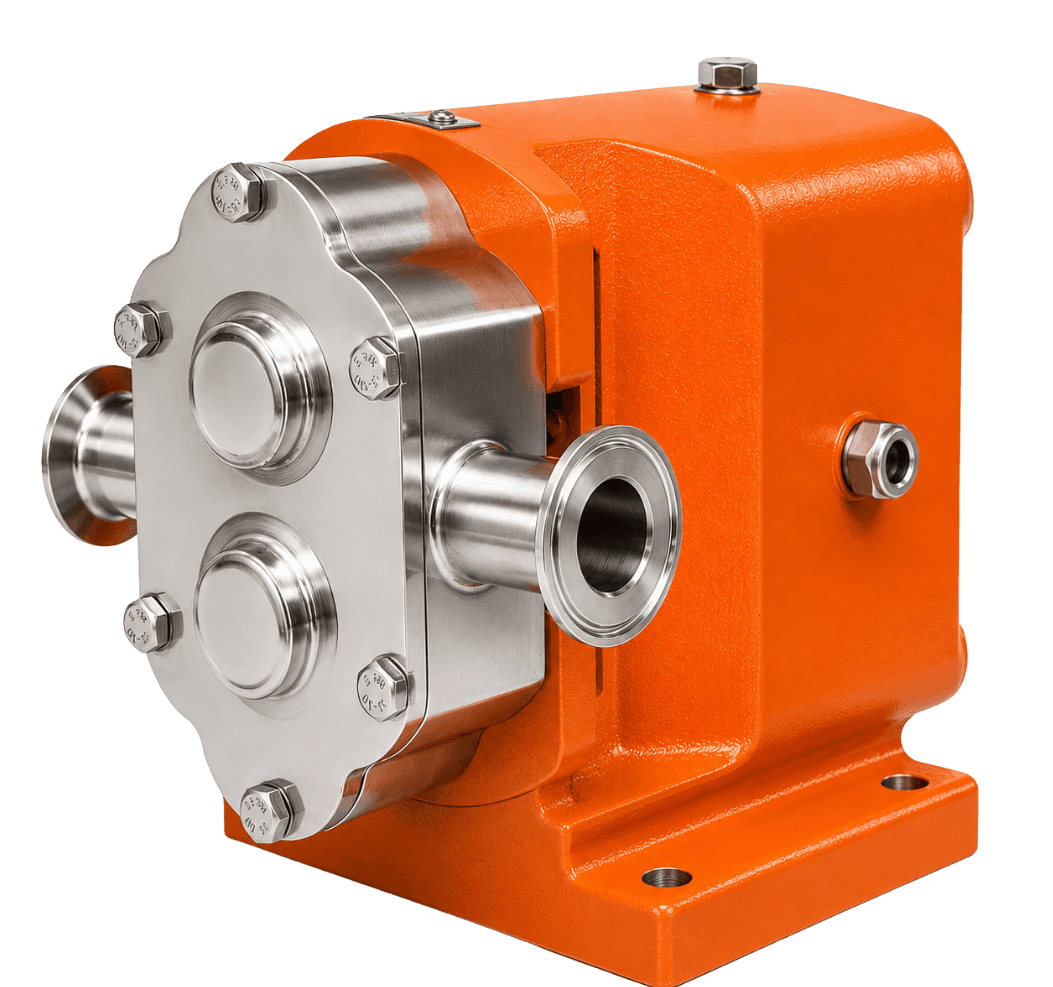
A ghee transfer pump must be selected from the product’s viscosity at the real operating temperature, because temperature changes suction behaviour, pipe loss, torque and pressure. Shubham’s LBX rotary lobe series is the normal starting route, subject to review of flow, tank level, line geometry, cleaning, material, seal and drive requirements.
Selection basis
Treat temperature and viscosity as one operating input
“Hot ghee” is not a duty point. The engineer needs the expected viscosity at start-up, normal transfer and any low-temperature condition. Those values must be evaluated with the source tank level, pipe geometry and required batch time.
Temperature falls
Viscosity may rise, increasing inlet and discharge losses.
Inlet loss rises
Pump filling can deteriorate even when the discharge duty appears modest.
Torque demand rises
The drive and operating speed may need to change with the worst condition.
Ghee duty table
Operating data required before LBX sizing
| Selection factor | What to provide | Why it matters for ghee |
|---|---|---|
| Operating temperature | Normal product temperature plus start-up and shutdown conditions | Sets the viscosity basis and affects seal, elastomer and material review. |
| Viscosity at temperature | Measured or supplier value at each relevant transfer condition | Controls inlet filling, pump speed, torque and pipe friction. |
| Suction condition | Tank level, flooded or lift condition, inlet size, length, valves and fittings | A viscous product needs a low-loss inlet path to reach the pumping chambers. |
| Line losses | Discharge length, diameter, fittings, valves, filters and downstream equipment | Ghee viscosity can create substantial friction loss that must be included in pressure. |
| Required flow | Target batch volume and transfer time, including any operating range | Determines displacement and speed without ignoring viscosity or pressure limits. |
| Discharge pressure | Static lift, pipe loss and receiving-vessel back pressure | Defines the load the pump, drive and seal must handle. |
| Seal compatibility | Product, temperature, cleaning chemistry and leakage tolerance | Prevents a generic seal choice from being applied to an incompatible duty. |
| Cleaning method | Manual or CIP method, chemistry, temperature and drainage arrangement | Affects connections, seals, downtime and the supplied pump build. |
| MOC | Required casing, rotor, shaft, seal-face and elastomer materials | All product-contact parts must suit ghee and the cleaning cycle. |
| Connection | Existing line standard, size and any reducer or hose arrangement | Influences inlet restriction, drainage and installation compatibility. |
System review
Check the whole ghee line, not only the pump
Positive displacement technology cannot compensate for an inlet that starves the pump or a discharge system whose losses were omitted from the duty.
| System condition | Selection risk | Required review |
|---|---|---|
| Cold start or idle line | Product may be more viscous than during normal production | Provide the worst expected start-up viscosity; do not size only for steady operation. |
| Long transfer line | Friction loss can dominate the required discharge pressure | Calculate the actual line length, diameter, fittings and product viscosity together. |
| Low tank level | Available suction pressure falls as the source vessel empties | Check the minimum operating level and inlet geometry. |
| Filter, meter or filling machine | Downstream equipment adds resistance and may require stable flow | Include each component’s pressure loss or operating requirement. |
| Cleaning cycle | Cleaning liquid can have very different properties from ghee | Review the pump across product transfer and cleaning conditions. |
LBX starting route
When rotary lobe transfer is normally reviewed
Verified LBX application data lists ghee and identifies temperature, viscosity and clean transfer as the main concerns. Review the official LBX specifications and the broader viscous food selection guide.
Selection boundary
When the proposed duty needs reconsideration
Reassess the selection if viscosity is unknown, the product may solidify in the line, suction is restrictive, cleaning chemistry is incompatible, or the required pressure is outside verified data. The dairy guide helps compare the route with other dairy liquids.
Selection support
Send ghee viscosity at the actual transfer temperature
Include start-up and normal operating conditions, batch volume and transfer time, tank level, suction and discharge line details, filters or meters, required pressure, cleaning method, MOC, connection, seal, elastomer, drive and quantity.
Common questions
Ghee transfer pump questions
Which pump is normally considered for ghee transfer?
LBX rotary lobe technology is the normal starting point when ghee viscosity requires positive displacement transfer. Final suitability depends on viscosity at the actual operating temperature, flow, pressure, suction condition, line losses, cleaning method, material and seal compatibility.
Why is operating temperature important for a ghee pump?
Ghee viscosity changes with temperature, which alters inlet filling, pipe friction, required torque and discharge pressure. Provide the product temperature and viscosity at start-up and normal transfer rather than relying on a generic ghee temperature assumption.
Does the ghee transfer line need heating?
That depends on the product condition, ambient conditions, line length, transfer time and acceptable viscosity. Heating or insulation should be decided by the process engineer. Share any jacketed line, heat-tracing or start-up requirement so the pump duty can be reviewed with the system.
What suction information is required for ghee transfer?
Provide tank level, whether the inlet is flooded, inlet pipe or hose diameter and length, fittings, valves, product temperature and any suction lift. A restrictive inlet can prevent a viscous product from filling the pump correctly.
What should be sent for an LBX ghee pump quotation?
Send ghee viscosity at operating temperature, start-up condition, flow, pressure or total head, tank level, suction and discharge line details, cleaning method, MOC, connection, seal and elastomer requirement, motor or drive, installation format and quantity.