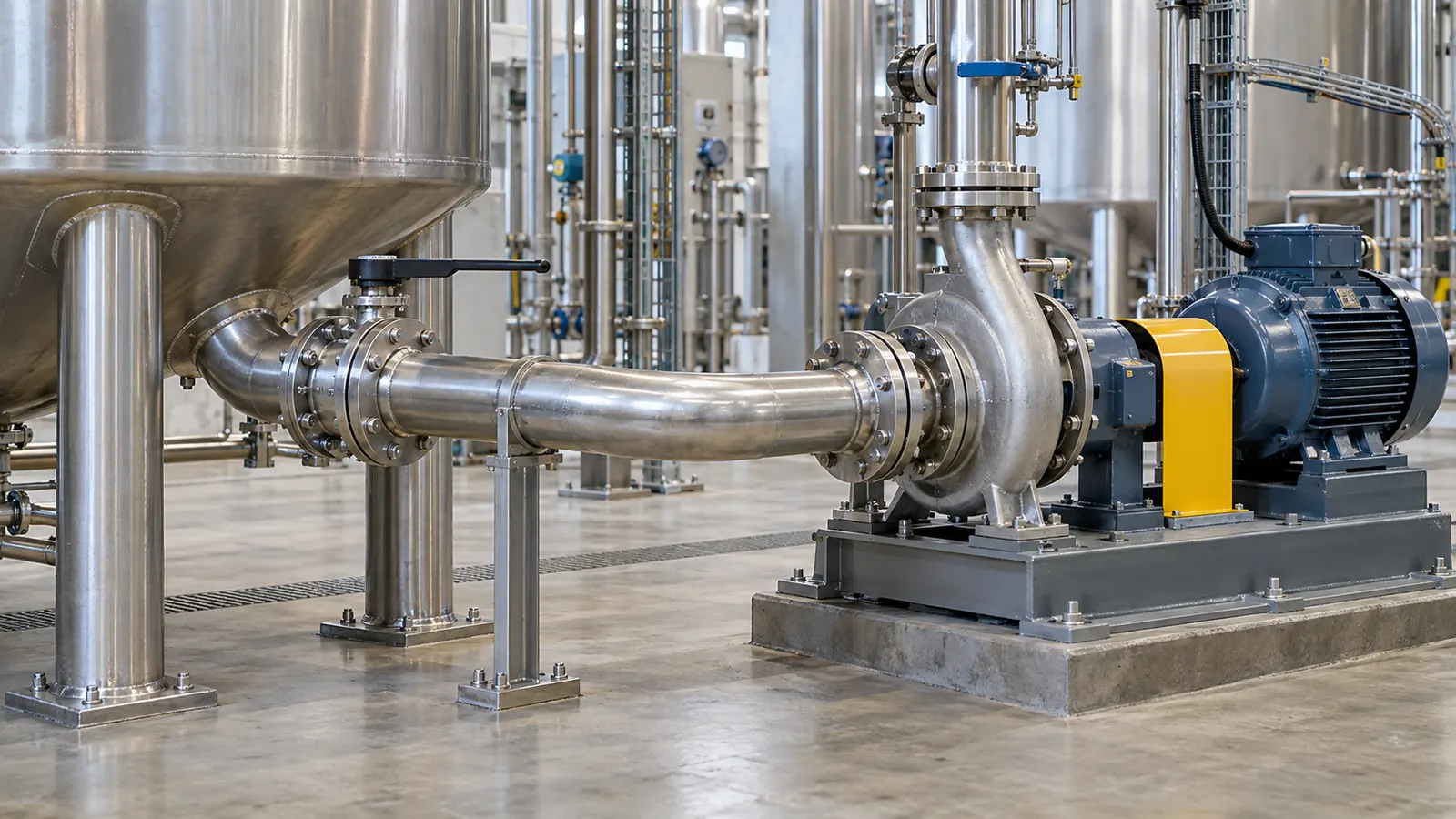
Good centrifugal pump suction piping delivers liquid to the inlet with limited pressure loss, without trapped air or avoidable flow disturbance. Review source level, suction lift, pipe route, fittings and NPSH available at the real operating temperature. Support the pipe independently and confirm reducer orientation and straight-run needs against the pump manufacturer's installation instructions.
Route the suction line to avoid trapped air
Unvented high points can collect gas, especially during filling or on a suction-lift arrangement. Keep the route as direct as the installation permits and provide the venting arrangement specified for the service. Review source drawdown, liquid level and all operating conditions; a line that works at a full tank may fail at the lowest operating level.
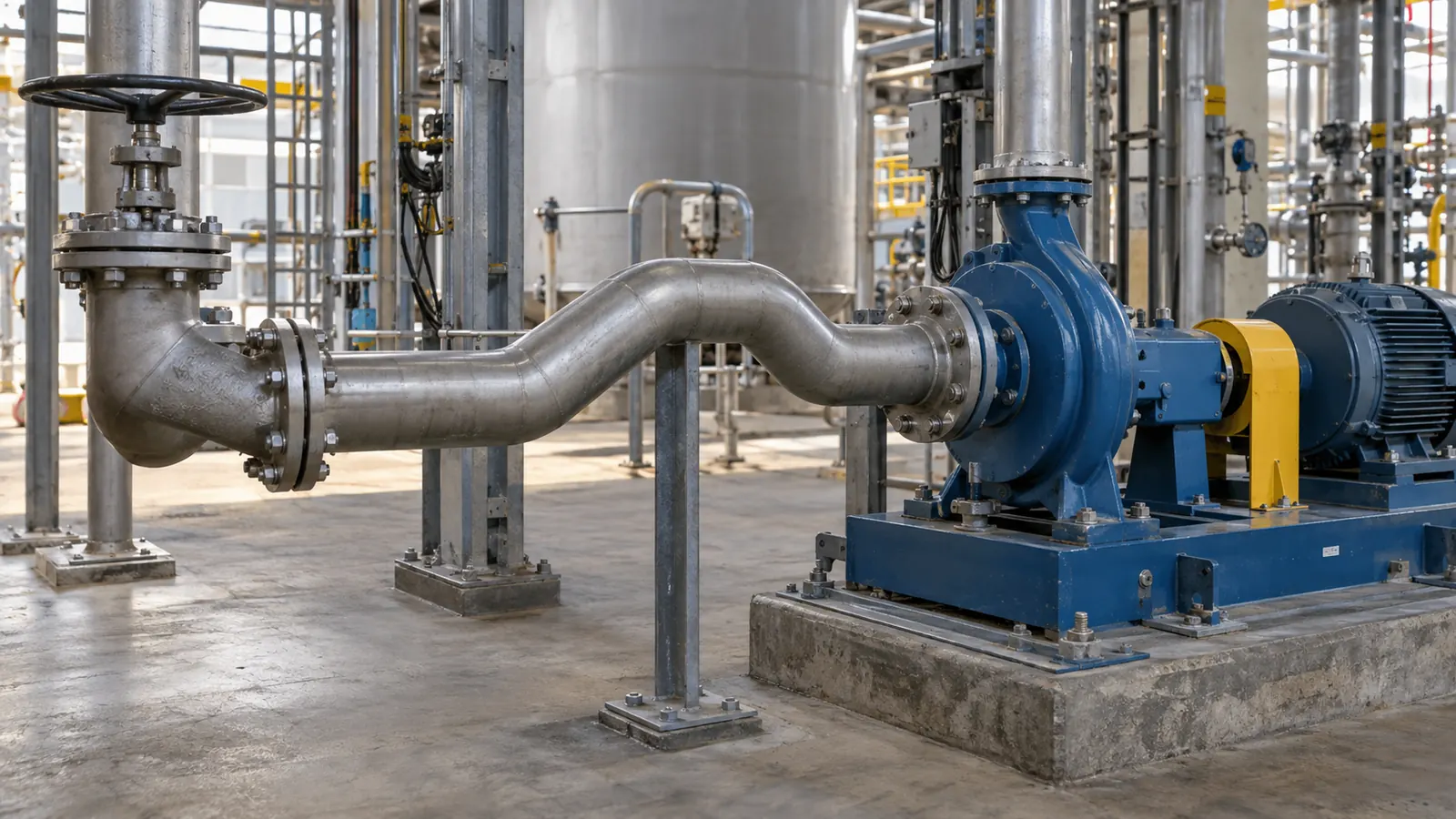
Size the line for suction pressure, not flange convenience
Pipe length, valves, elbows, strainers and velocity all contribute to suction pressure loss. A suction line chosen only to match the pump nozzle can add avoidable loss. Calculate NPSH available using the worst credible liquid temperature and source level; compare it with the pump's NPSH required at the actual flow. Include strainer fouling and valve position in the review where applicable.
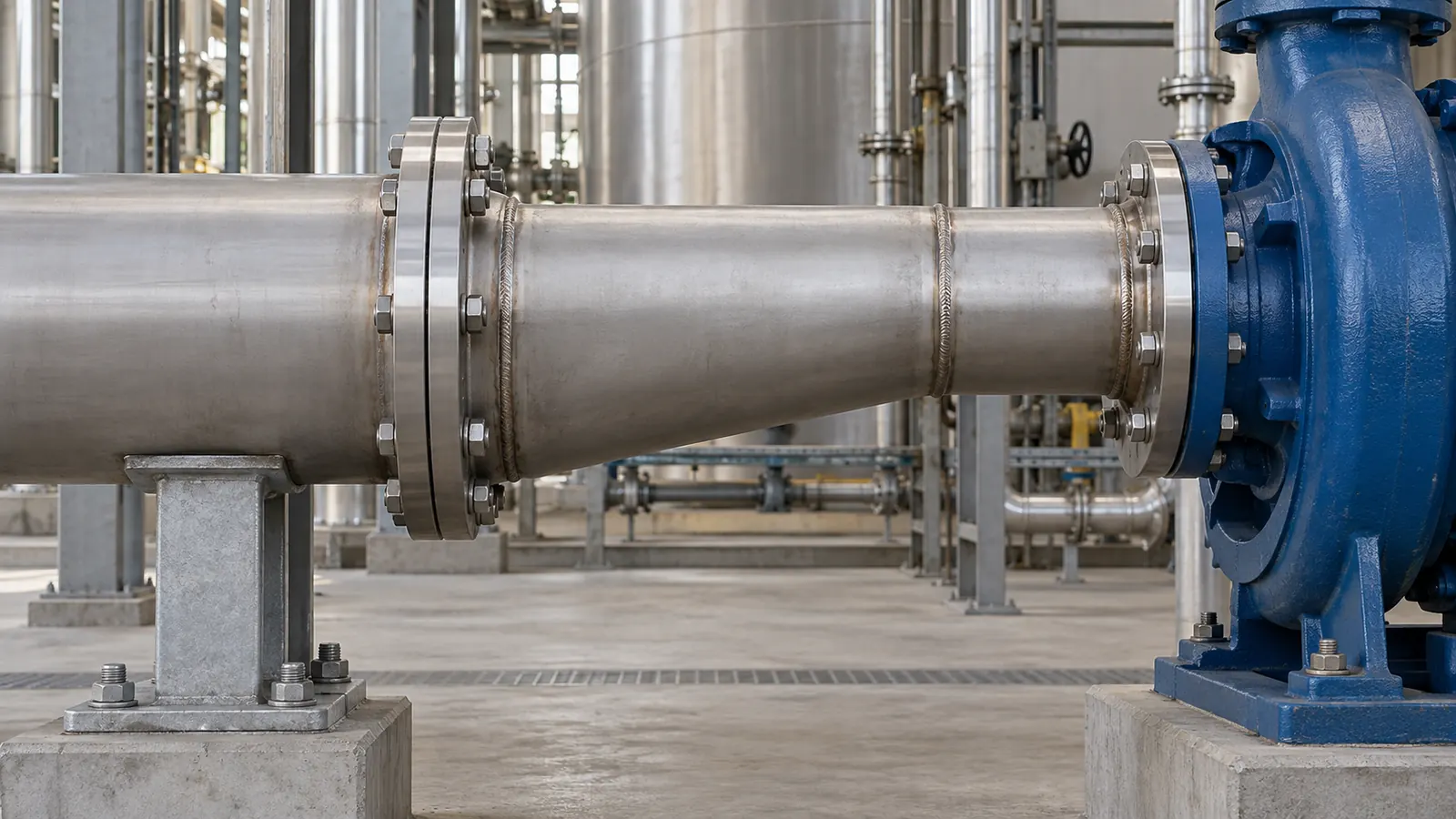
Review reducers and elbows at the inlet
A change in pipe diameter may require a reducer. Eccentric reducers are used in some horizontal suction layouts to help avoid a gas pocket, but the correct orientation depends on pipe geometry and the manufacturer's installation instructions. An elbow immediately at the inlet can distort the arriving flow; discuss the available straight run with the pump supplier. No single reducer orientation or straight length applies to every installation.
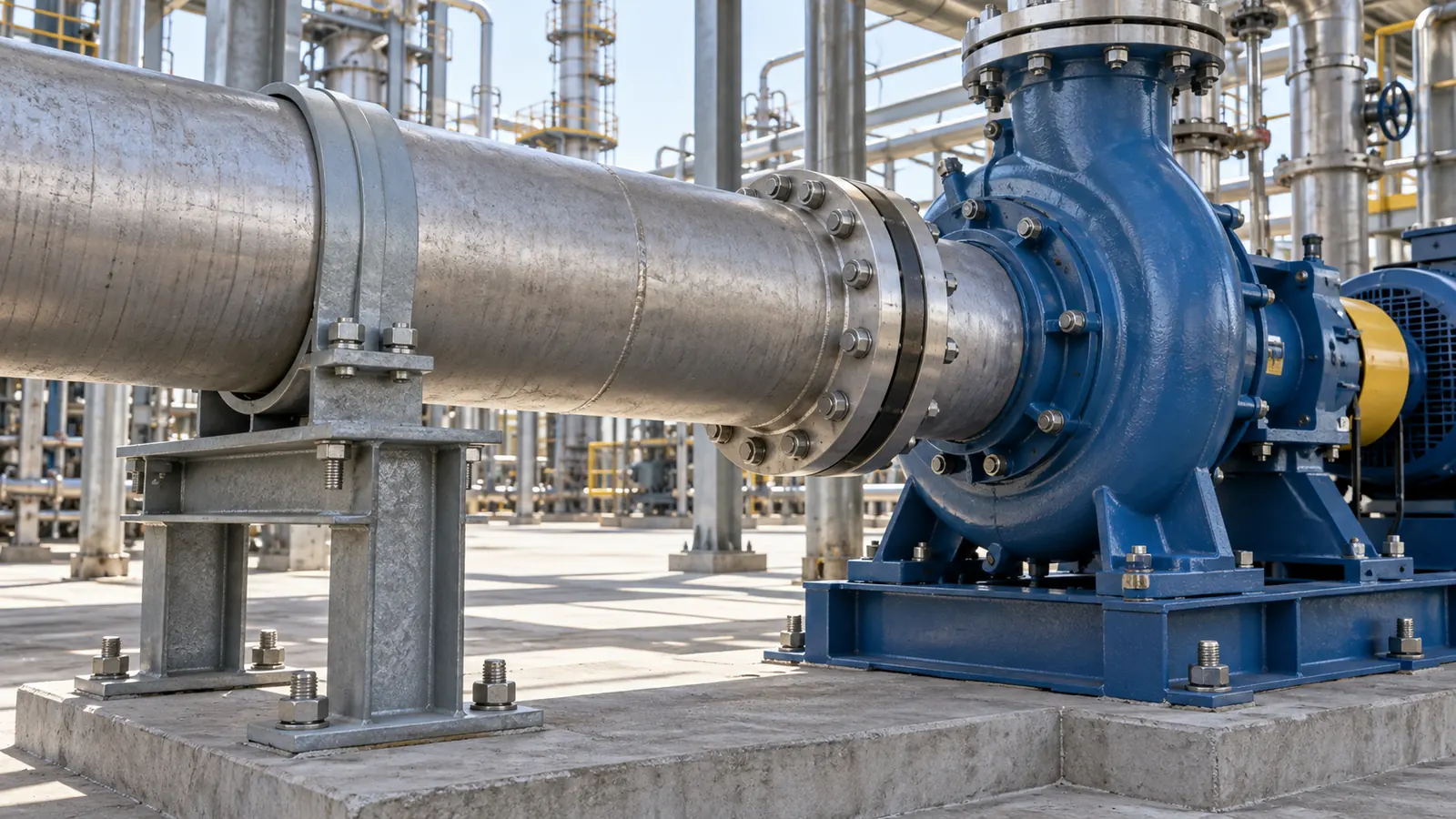
Support piping independently of the pump
The suction nozzle is not a pipe support. Design supports and alignment so the assembled pipe does not pull the pump casing or disturb its alignment. Nozzle load limits are model-specific; request them for the selected pump rather than applying an invented universal value.
Commissioning checks before start-up
Before startup, verify the intended valve line-up, source liquid level, priming/vent status, strainer condition, pressure instruments and leak tightness under the site's procedure. Record suction and discharge pressures at the actual operating flow. If repeated priming loss or cavitation symptoms occur, stop and reassess the suction system rather than treating noise as normal.
Suction piping design and commissioning checklist
| Item | What to review | Why it matters |
|---|---|---|
| Source level and suction lift | Lowest operating level and pump elevation | Controls static contribution to NPSHa |
| High points | Potential trapped gas and approved venting | Air can interrupt priming and flow |
| Pipe and fittings | Length, diameter, valves, elbows and strainer losses | Losses reduce inlet pressure |
| Reducer and elbow | Manufacturer layout guidance for selected model | Inlet flow quality and gas-pocket risk |
| Pipe support | Independent support and nozzle alignment | Limits avoidable casing strain |
| Commissioning | Readings, leaks, strainer and valve line-up | Provides a safe operating baseline |
Related guidance and engineering review
Use the relevant product and technical guidance below to check the actual duty. For a model-specific review, send the liquid, flow, head or discharge pressure, suction conditions, temperature, and available pump and motor records through the technical inquiry form.
- NPSH guide — Understand inlet pressure and vapor pressure.
- suction arrangement comparison — Choose the appropriate installation arrangement.
- installation resource — Review broader commissioning steps.
- SCC centrifugal series — Request model-specific suction data.
- NPSH calculator — Screen available suction head.
Frequently asked questions
Why do suction pipe high points matter?
An unvented high point can collect air or gas, making priming and stable inlet flow difficult.
Should the suction pipe always match the pump inlet size?
No. Size the pipe from the required flow and allowable suction losses, then review any diameter transition against manufacturer guidance.
Is an eccentric reducer always required at pump suction?
No universal reducer rule applies. Evaluate the pipe route, orientation and manufacturer installation requirements for the selected pump.
How do strainers affect NPSH available?
A strainer adds suction pressure loss, which may increase as it fouls. Include that loss in the NPSHa assessment.
Can the pump nozzle support the suction pipe?
The piping needs its own support. Confirm allowable nozzle loads for the selected pump and avoid assembly strain.
—— GET EXPERT HELP
Need a model-specific engineering review?
Share the operating conditions and current observations. Our team can review the pump and installation duty.