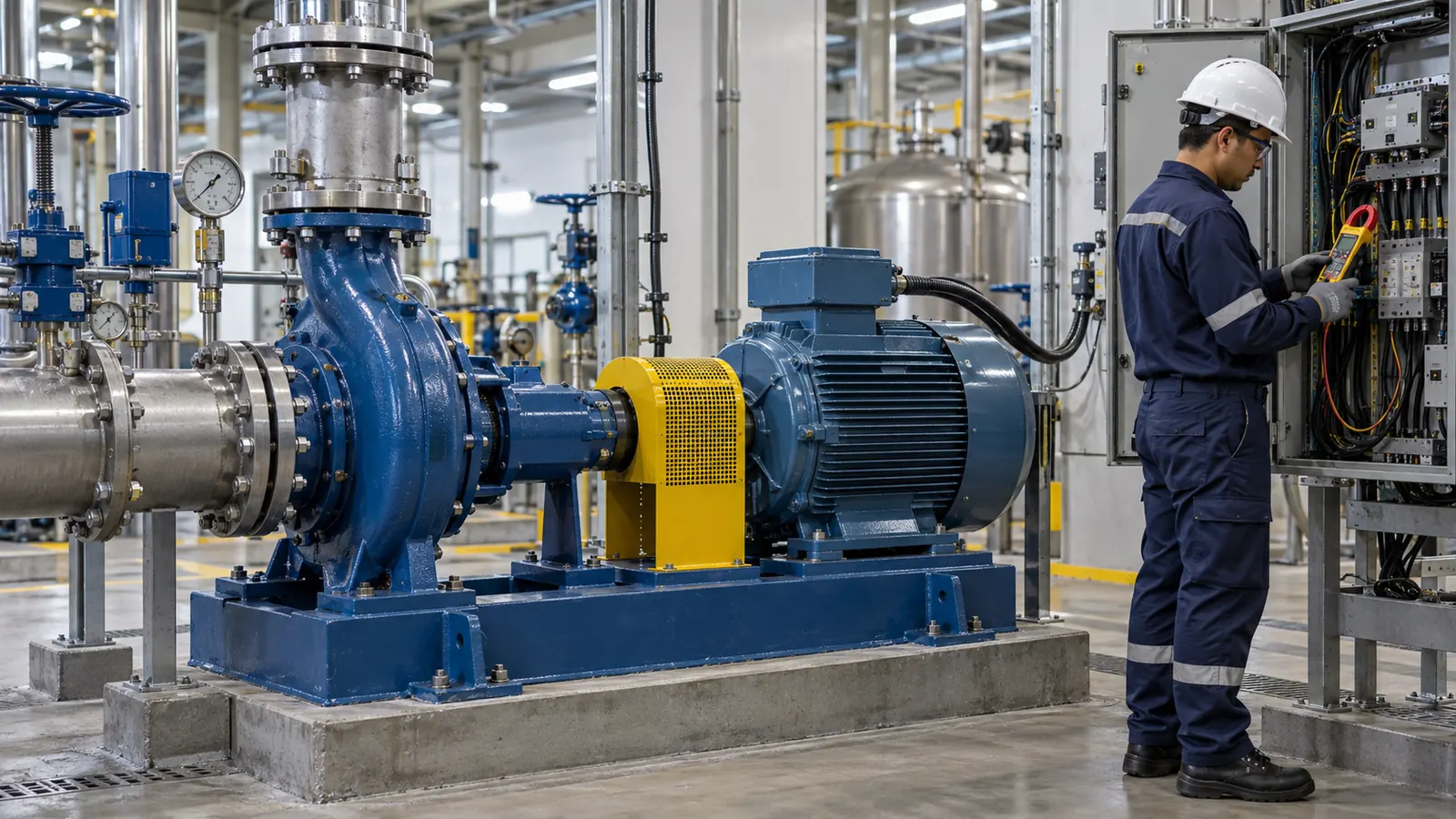
High motor current on a centrifugal pump may reflect an off-design hydraulic operating point, denser liquid, mechanical drag or an electrical supply problem. Compare measured current with the motor nameplate and baseline while recording flow, pressure and liquid properties. Stop and isolate the unit under site rules if protection trips or overheating appears; qualified staff must handle electrical tests.
Establish the baseline before assigning a cause
Record current on all phases if available, motor nameplate data, flow, suction and discharge pressure, liquid specific gravity, valve position and recent changes. A single current reading without the operating point can mislead. Compare with the documented duty and protection settings; do not raise an overload setting to keep a troubled pump running.
Hydraulic load and liquid density
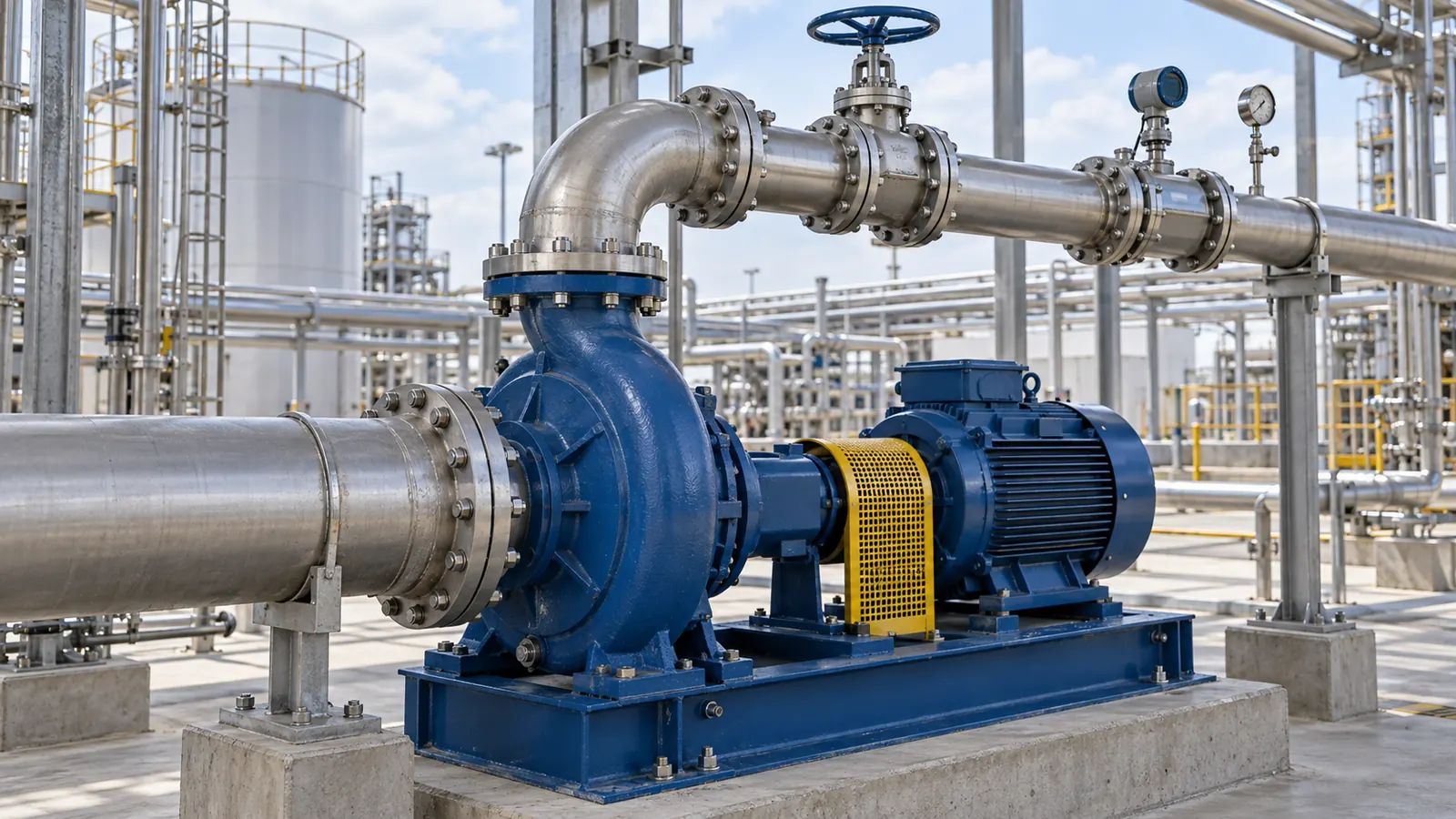
For many radial centrifugal pump applications, reduced system resistance allows more flow and may raise absorbed power. The exact relationship is curve-dependent, so inspect the actual power curve rather than assuming every centrifugal design behaves identically. A liquid with greater specific gravity than the design liquid can also increase shaft power at a similar hydraulic duty. Check the measured flow and pressure against the selected curve.
Rubbing, bearings and alignment
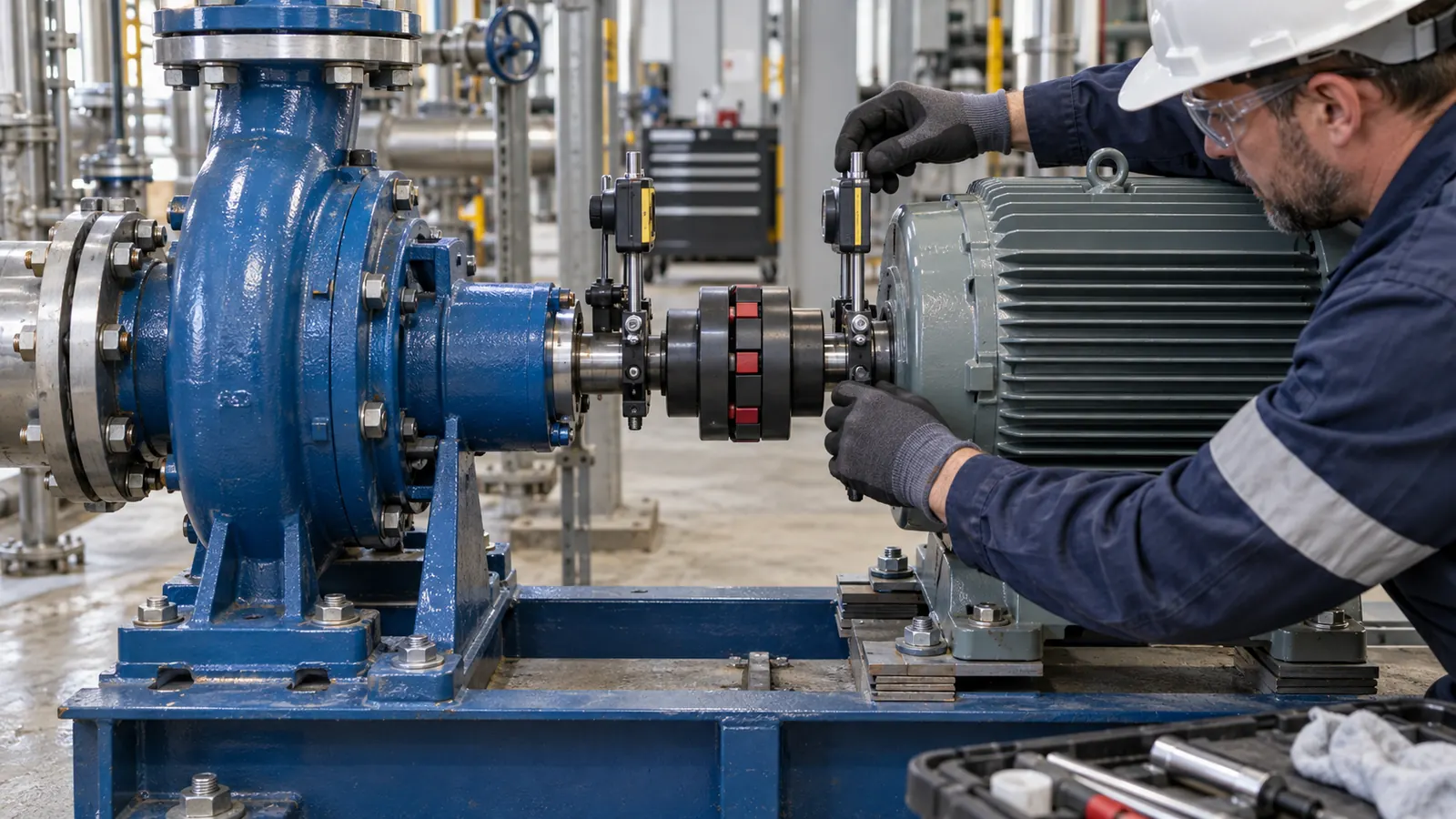
An impeller rubbing the casing, stressed piping, a damaged bearing or coupling misalignment can add mechanical load. Changes in vibration, noise or bearing temperature help prioritize investigation but do not prove a root cause. Stop, isolate and allow qualified maintenance personnel to inspect; never remove guards or approach rotating parts while operating.
Supply, phases and motor match
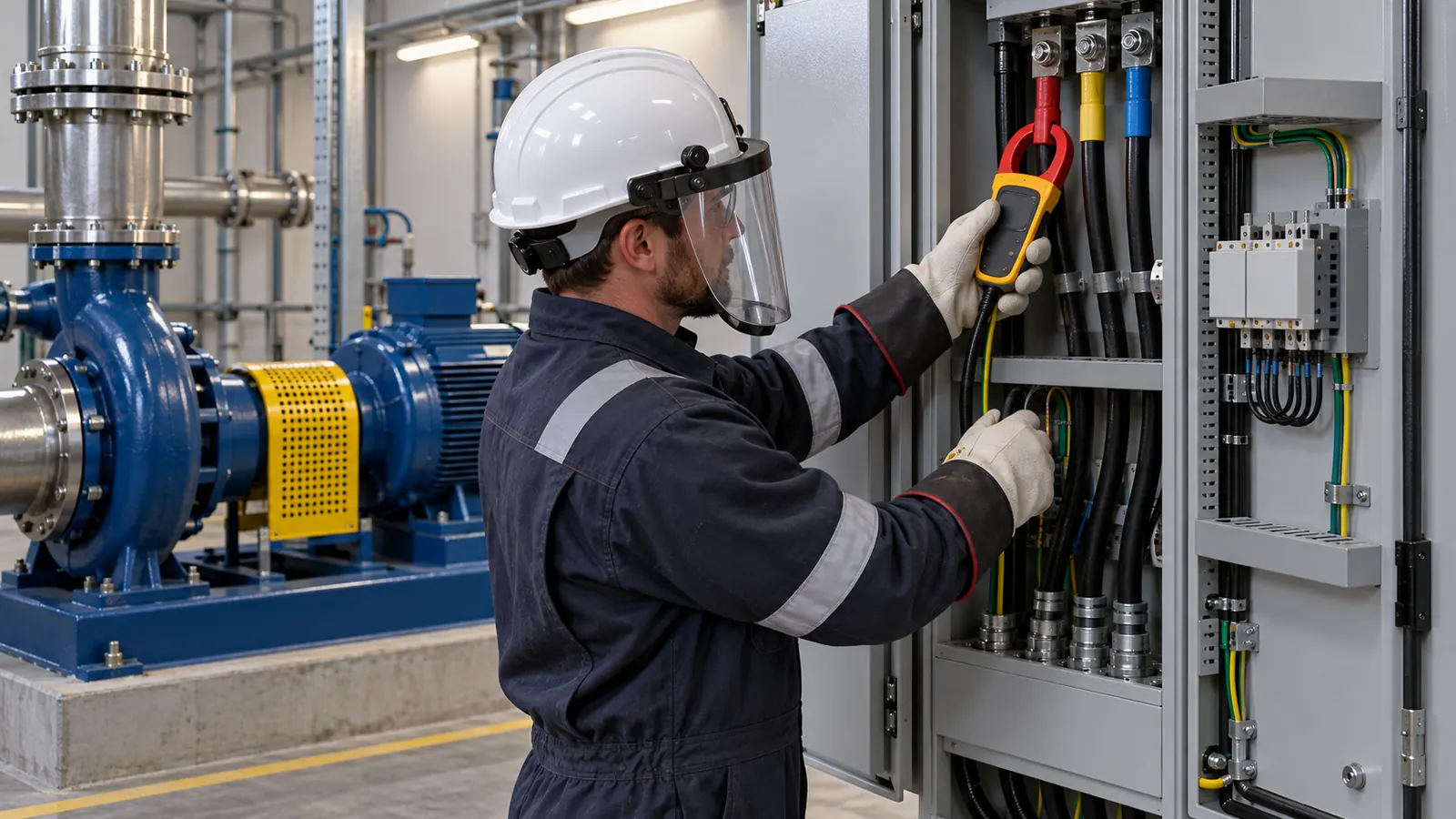
Supply voltage problems, phase imbalance, incorrect connection or a motor selected for a different duty can increase current or heating. Qualified electrical staff should compare readings with the motor nameplate, protection equipment and site electrical design. Do not diagnose from a single phase reading or work on energized terminals without the site's controls.
Resolve the cause at the operating point
Once the source is identified, correct the system, mechanical condition or electrical issue and recheck current at the intended flow and head. If the operating point has changed, review pump and motor selection together. Send the curve, liquid properties and readings for engineering review rather than choosing a larger motor in isolation.
High-current observations and safe checks
| Observation | Possible hydraulic cause | Possible electrical/mechanical cause | Safe check |
|---|---|---|---|
| Flow above intended duty | Lower system resistance or changed valve line-up | Motor may be undersized for revised duty | Compare flow/head with pump and power curves |
| Liquid or recipe changed | Higher specific gravity | No direct evidence yet | Confirm actual liquid properties at temperature |
| New vibration or noise | Operating away from intended region | Rubbing, bearing or alignment fault | Stop and arrange isolated inspection |
| Uneven phase readings | Hydraulic load alone does not explain imbalance | Supply or winding issue | Qualified electrical review of all phases |
| Current high after maintenance | Impeller or duty change | Alignment or connection error | Compare maintenance record and baseline |
Related guidance and engineering review
Use the relevant product and technical guidance below to check the actual duty. For a model-specific review, send the liquid, flow, head or discharge pressure, suction conditions, temperature, and available pump and motor records through the technical inquiry form.
- SCC pump series — Review model duty and curve data.
- CMB pump series — Review the relevant centrifugal range.
- performance curve guide — Locate the operating point and power trend.
- motor selection guide — Review motor sizing inputs.
- pump power calculator — Screen hydraulic power inputs.
Frequently asked questions
Why does my centrifugal pump draw more current at higher flow?
For many radial centrifugal designs, more flow can require more shaft power. Confirm the trend on the specific pump power curve rather than assuming it for every design.
Can liquid specific gravity raise motor current?
Yes. A denser liquid can raise absorbed power for a comparable hydraulic operating point. Use the actual liquid property in the power review.
Can poor alignment increase motor current?
Mechanical drag from misalignment can add load, often with vibration or heating. Inspect only after the equipment is stopped and isolated.
Should I increase the overload setting to stop trips?
No. Repeated trips require an investigation of the motor, pump, liquid and electrical supply against approved settings.
Who should check voltage and phase imbalance?
A qualified electrical worker should perform those checks under the plant's electrical safety procedure.
—— GET EXPERT HELP
Need a model-specific engineering review?
Share the operating conditions and current observations. Our team can review the pump and installation duty.