
A centrifugal pump can run without delivering liquid when its casing is not primed, air enters the suction line, the inlet is blocked, rotation is wrong, or the system demands more head than the pump can produce. Stop the unit if it overheats, vibrates severely or runs dry; diagnose from safe external observations before opening equipment.
First checks without opening the pump
Record suction and discharge gauge readings, tank level, valve positions, motor status and whether liquid previously flowed at this duty. Confirm that an instrument is reading correctly before treating a zero indication as zero flow. If the casing is hot, the pump is dry, or vibration is severe, stop and isolate it under the site's procedure.
- Check the source tank level and intended valve line-up.
- Compare measured discharge pressure with the pump curve and system duty.
- Avoid repeated dry starts while a suction problem remains unresolved.
Loss of prime, air binding and suction leaks
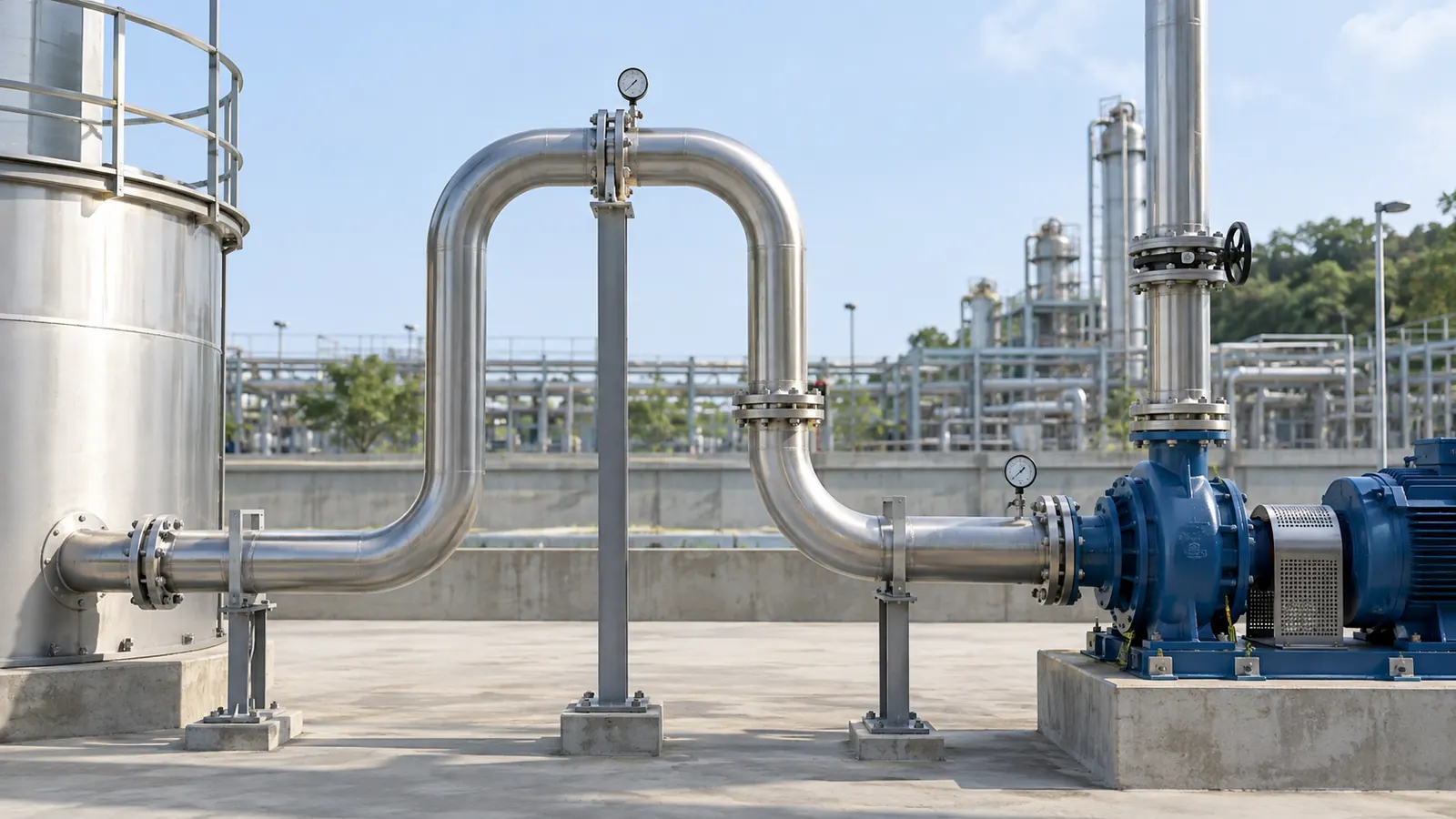
A standard centrifugal pump needs liquid at the impeller to develop useful head. After maintenance or draining, trapped air may remain in the casing or a high point. A leak on a suction-lift line can admit air without visibly leaking liquid. Review the approved priming and venting procedure while the machine is stopped and isolated; inspect joints and the liquid source for an air path.
Blocked inlet or suction strainer
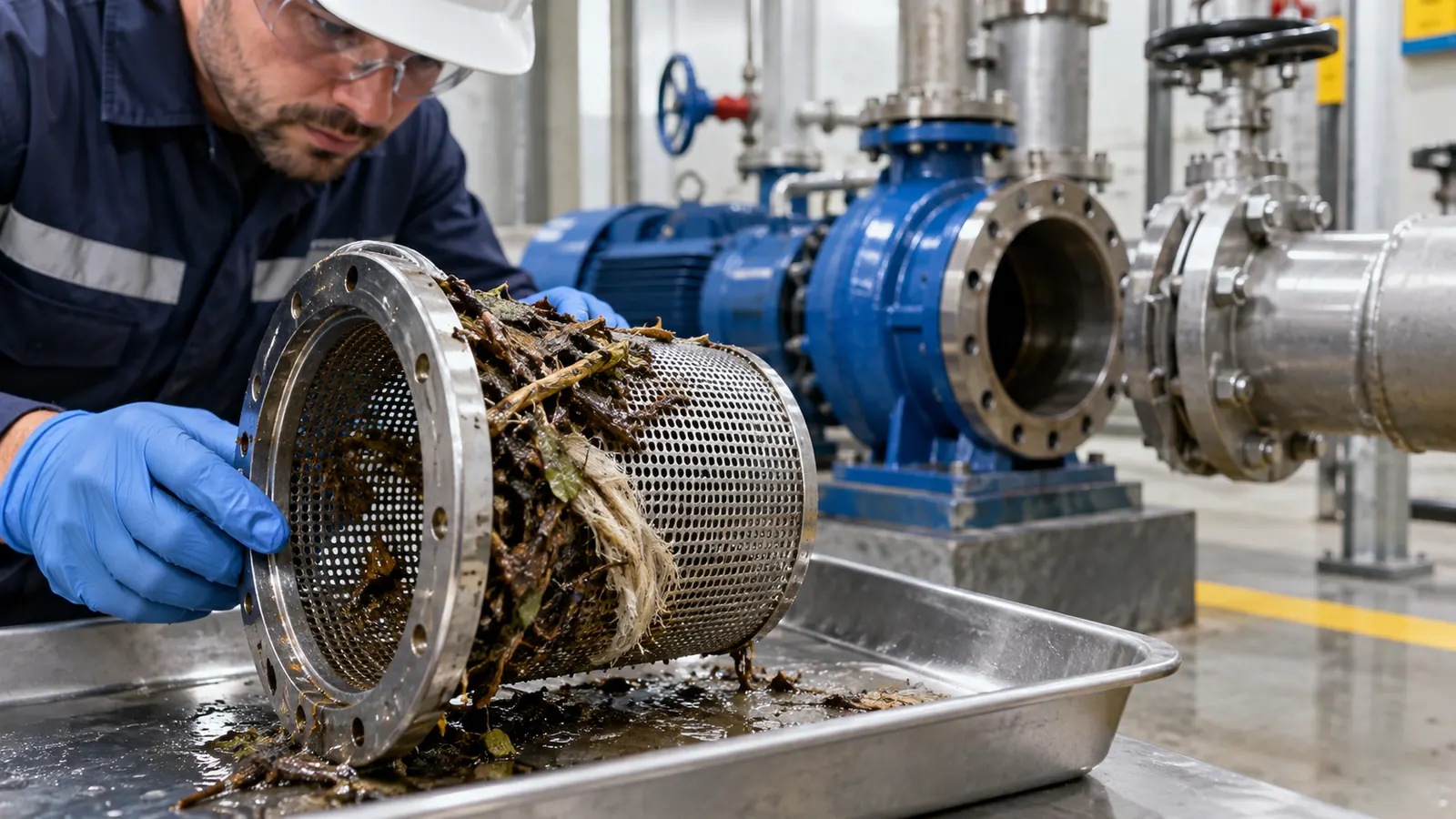
A blocked strainer, closed inlet valve or collapsed suction hose can starve the pump. A falling suction pressure and unstable flow may support this diagnosis, but instruments and line configuration must be checked. Isolate, depressurize and drain according to site procedure before anyone inspects a strainer.
Wrong rotation after motor work
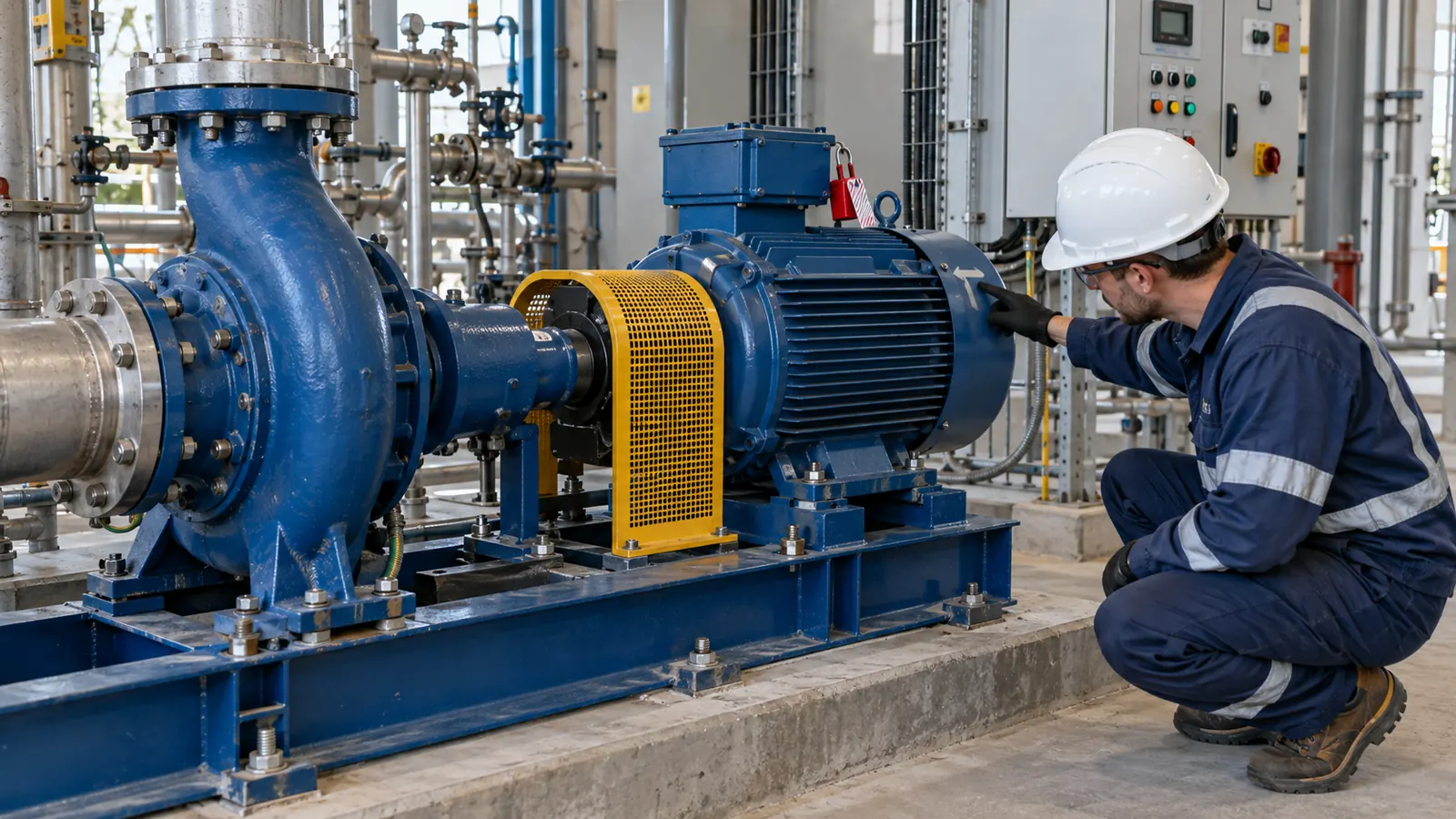
A direction error following electrical maintenance can sharply reduce centrifugal pump performance. Compare the motor/pump rotation indication with the manufacturer's arrow using the site's safe verification procedure. Electrical checks belong to qualified personnel after isolation; never remove a coupling guard or touch moving parts to confirm direction.
System head, vapor formation and later-stage checks
If the actual discharge head exceeds the pump's available head at the operating point, useful flow may be absent. A closed discharge path or unexpectedly high line resistance can produce this condition. Separately, low suction pressure or elevated liquid temperature may reduce NPSH available and allow vapor formation. Compare actual liquid temperature, level, suction losses and pump NPSH required at the duty point.
Only after external causes are ruled out should a qualified team isolate and inspect for a clogged, damaged or incorrectly assembled impeller. The fault may involve more than one cause; use the observations together rather than guessing from motor sound alone.
No-discharge diagnostic matrix
| Symptom | Likely cause | Safe check | Next action |
|---|---|---|---|
| After restart or drain-down | Lost prime or trapped air | Review tank level and approved vent status | Stop and re-prime by site procedure |
| Unstable suction reading | Air ingress or restricted inlet | Inspect accessible joints, valves and gauge trend | Isolate and repair leak or restriction |
| After motor wiring work | Wrong rotation | Compare documented direction and test record | Have qualified electrical staff correct it |
| High discharge pressure, no flow | Closed path or excessive system head | Check valve line-up and duty against curve | Resolve system restriction |
| Noise with poor suction conditions | Vapor formation or low NPSHa | Review level, temperature and suction losses | Recalculate suction duty before restart |
Related guidance and engineering review
Use the relevant product and technical guidance below to check the actual duty. For a model-specific review, send the liquid, flow, head or discharge pressure, suction conditions, temperature, and available pump and motor records through the technical inquiry form.
- SCC centrifugal pump — Review the documented pump model and curve.
- CMB series — Compare an alternative centrifugal duty.
- CPP series — Review the relevant chemical-duty product where the liquid requires it.
- cavitation troubleshooting guide — Investigate vapor-related symptoms.
- troubleshooting resource — Use the broader fault reference.
Frequently asked questions
Why is my centrifugal pump running but not pumping liquid?
Start with liquid level, priming, suction air, valve line-up and strainer condition. Then compare discharge head and motor rotation with the pump's documented duty.
Can wrong motor rotation cause zero flow?
Wrong rotation can substantially reduce a centrifugal pump's output and may contribute to no useful discharge. Verify direction only through a safe procedure with qualified personnel.
How does air in the suction line stop discharge?
Air can keep the casing or impeller from remaining filled with liquid, preventing the pump from developing its intended head.
Can excessive system head cause no discharge?
Yes. If the system requires more head than the pump can develop at the duty point, the operating point can move toward negligible flow.
When should the pump be stopped immediately?
Stop and follow site procedures for dry running, overheating, severe vibration, unexpected noise or a suspected hazardous leak. Do not open or work on energized equipment.
—— GET EXPERT HELP
Need a model-specific engineering review?
Share the operating conditions and current observations. Our team can review the pump and installation duty.