Last Updated: June 2026 - Verified by Shubham Industries Engineering Team
Cavitation is a destructive and preventable failure mode in centrifugal pump operation. It sounds like gravel inside the pump, causes vibration, and progressively erodes the impeller surface.
At Shubham Industries, Ahmedabad's industrial pump manufacturer since 1987, cavitation-related failures are among the most common problems reported by Indian process plants. Most cases trace back to suction system design or operation far from the correct duty point.
The Physics of Pump Cavitation
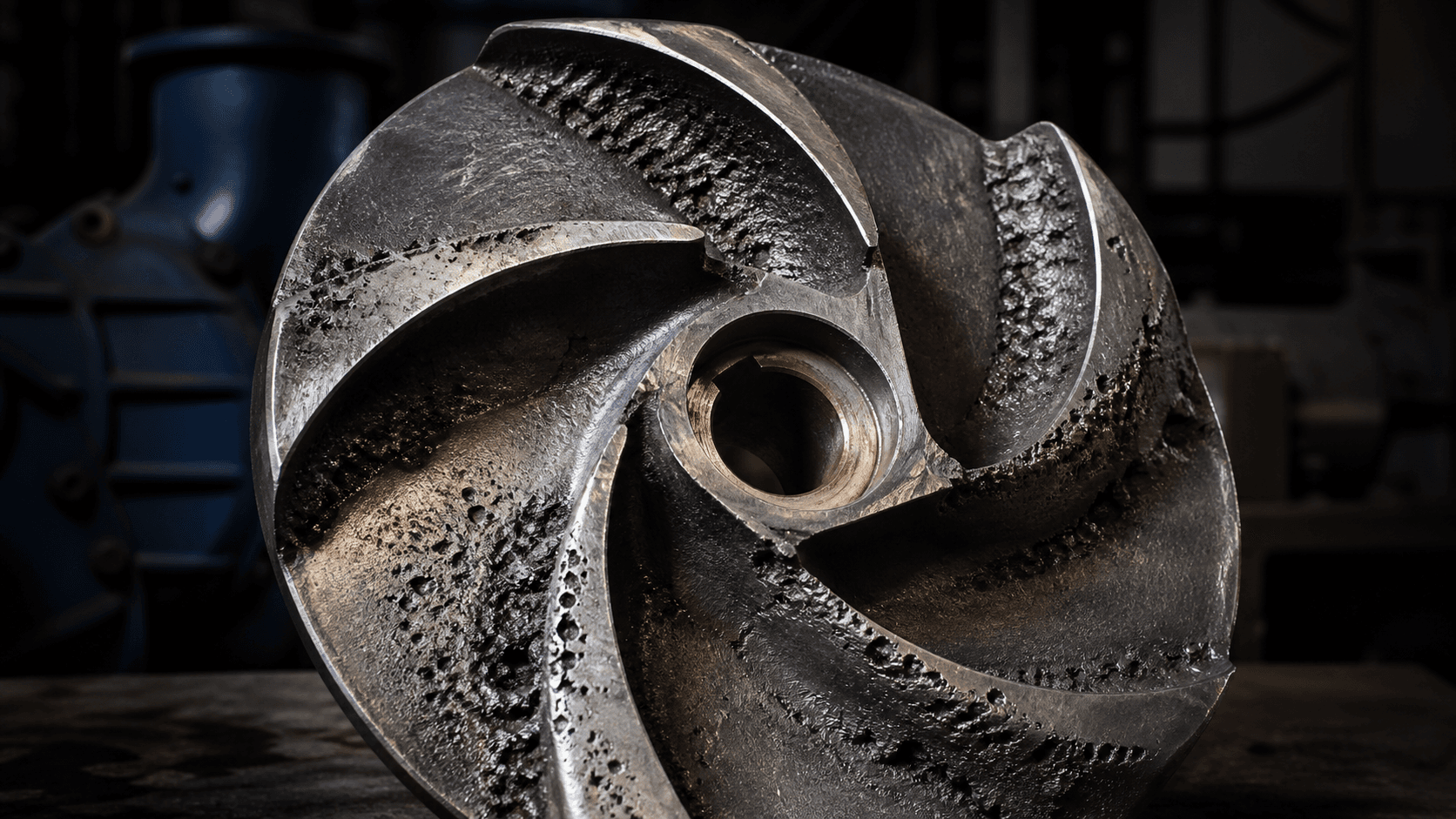
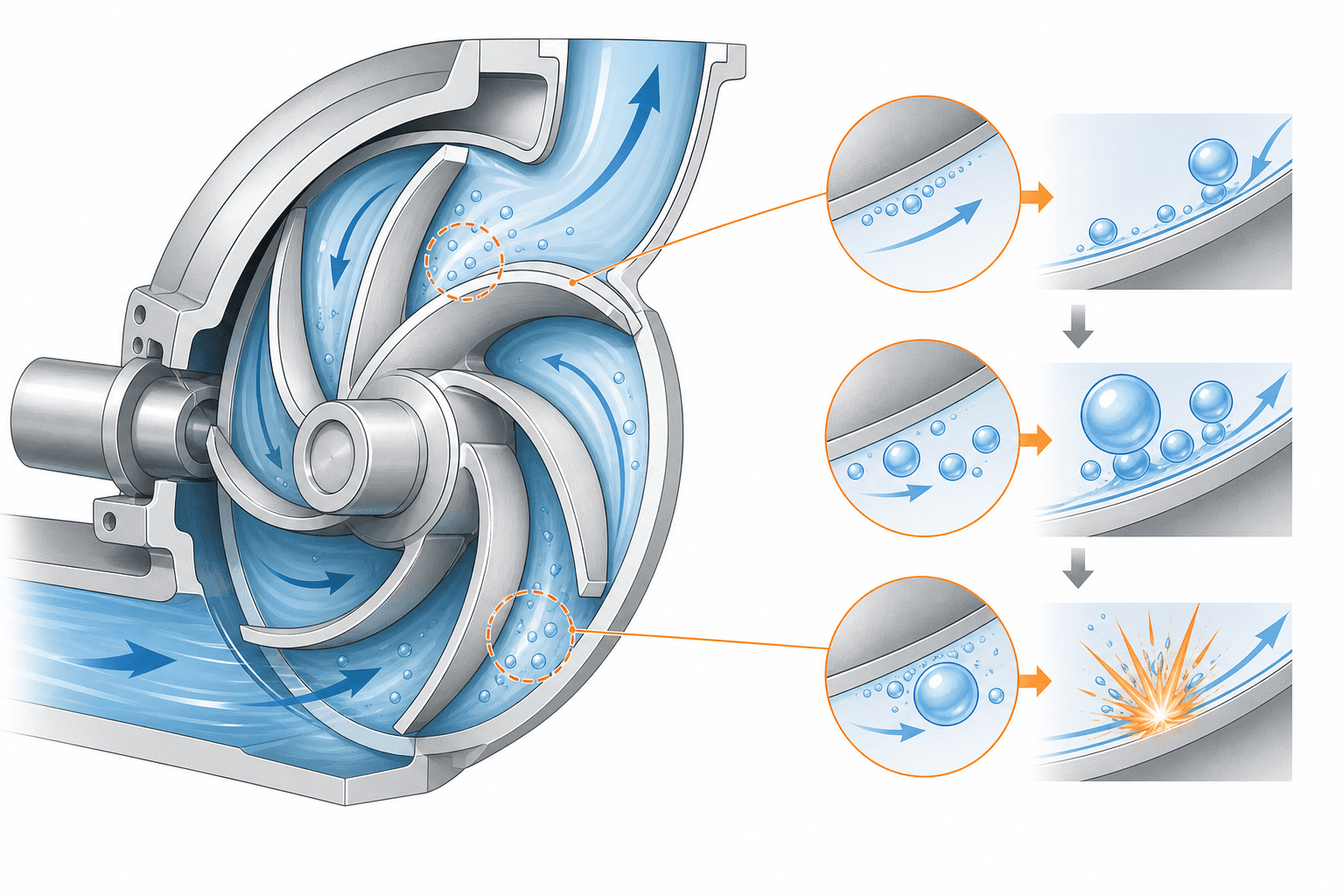
Cavitation begins when local pressure inside the pump drops below the fluid's vapour pressure. Vapour bubbles form near the impeller inlet and collapse violently in higher-pressure zones. The collapse creates microjets that strike the metal surface and cause pitting.
Root Causes of Cavitation in Centrifugal Pumps
Suction cavitation is caused by insufficient NPSHa. Typical reasons include suction lift, long or undersized suction piping, high fluid temperature, closed suction valves, clogged strainers, altitude, and operating above design flow. Read what is NPSH for the calculation framework.
Discharge cavitation occurs when the pump operates against excessive back pressure or too far left on the curve. Internal recirculation creates low-pressure zones near the impeller discharge. Both types cause noise and damage but require different corrections.
-- QUICK ANSWER
What are the main causes of centrifugal pump cavitation?
Centrifugal pump cavitation is usually caused by insufficient NPSHa at the pump inlet. The most common root causes are pump installation above liquid level, suction pipe that is too long or too small, excessive elbows or valves on the suction line, fluid temperature that raises vapour pressure, clogged suction strainers, and operation well above the design flow point. Discharge cavitation can also occur when a pump runs against excessive back pressure or too close to shutoff. Correct installation significantly reduces cavitation risk, but the actual solution must match the root cause. Shubham Industries reviews suction layout, temperature, flow, and pump curve data before recommending changes.
Shubham Industries | Kuha, Ahmedabad, Gujarat, India | Since 1987
Recognising Cavitation: Noise, Vibration, and Damage
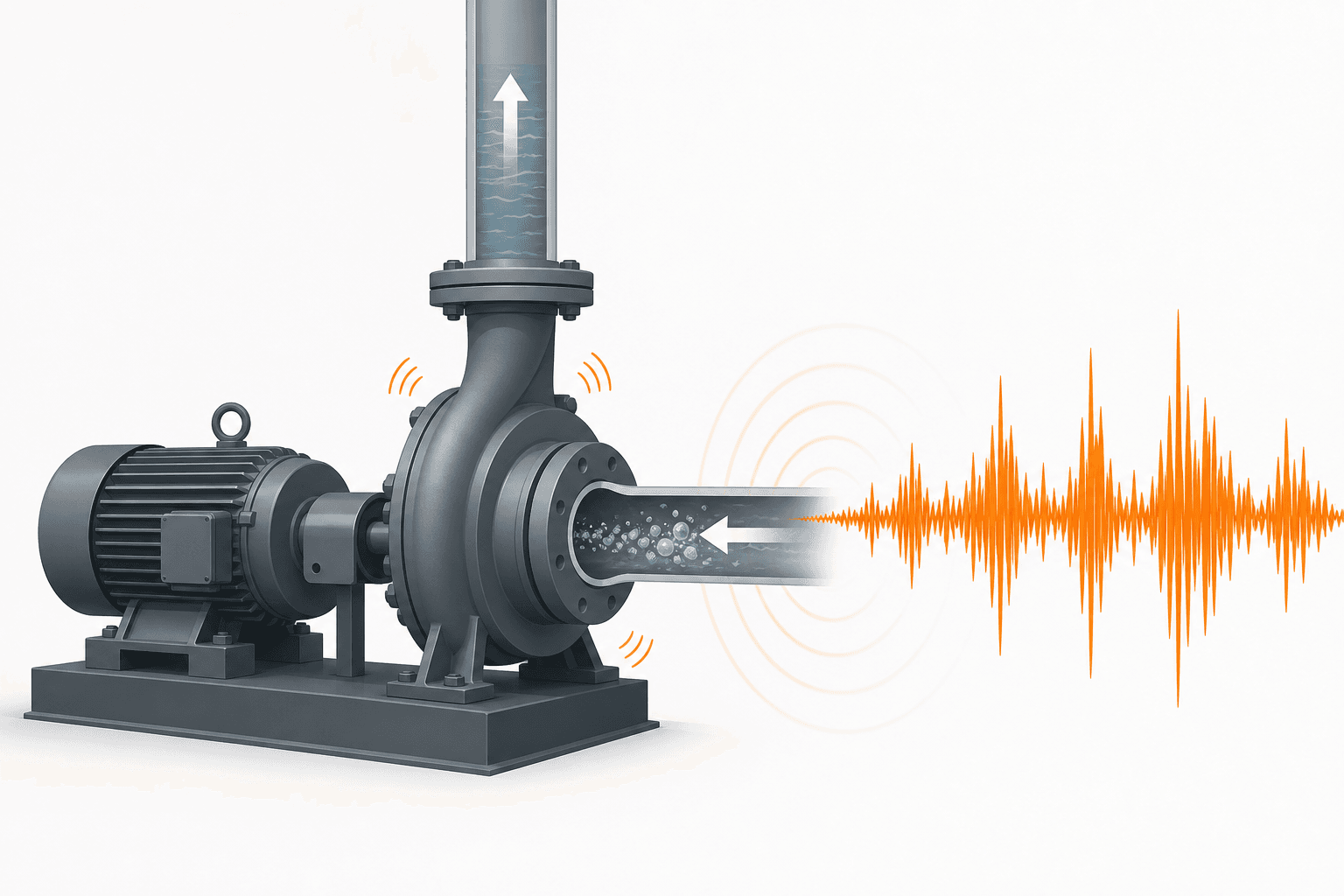
The classic sound is rattling, crackling, or grinding, often described as gravel in the pump. Vibration increases at the casing and bearing housing. Performance falls because vapour volume displaces liquid in the impeller passages. During inspection, cavitation damage appears as honeycomb pitting on impeller surfaces.
Suction Cavitation vs Discharge Cavitation
| Parameter | Suction Cavitation | Discharge Cavitation |
|---|---|---|
| Root cause | Insufficient NPSHa | Excessive back-pressure |
| Noise location | Suction side / impeller inlet | Impeller discharge / volute |
| Operating condition | High flow, low suction head, hot fluid | Low flow, high discharge pressure |
| Impeller damage | Pitting on inlet vane face | Pitting near impeller tip |
| Primary solution | Improve NPSHa | Operate closer to BEP |
| Secondary solution | Reduce temperature or flow | Reduce system head or add bypass |
Engineering Solutions to Prevent Cavitation
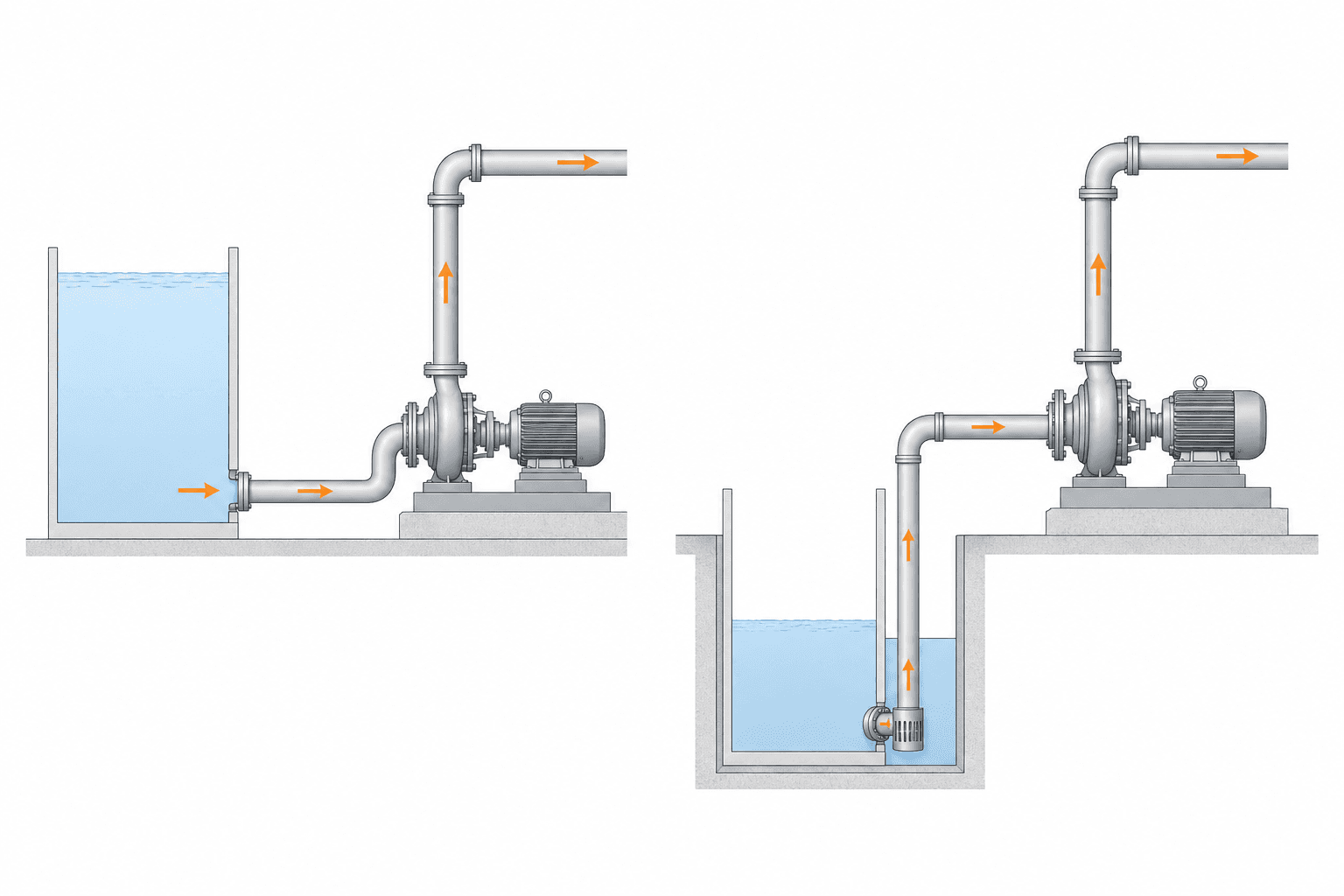
Keep suction piping short and straight, maintain low suction velocity, use long-radius elbows, install flooded suction wherever possible, and clean strainers. Verify NPSHa exceeds NPSHr with margin. For marginal suction conditions, a lower-speed pump can reduce NPSHr. Existing systems may need suction pipe redesign.
-- ENGINEERING ANSWER
How do you diagnose and cure cavitation in an existing pump installation?
Diagnose cavitation by checking for gravel-like sound, increased vibration, and reduced flow. Then measure suction pressure directly at the pump inlet and compare it with vapour pressure and the pump's NPSHr. Start with quick checks: clean suction strainer, verify suction valve is fully open, check liquid level, and reduce flow temporarily if needed. Permanent solutions may include larger suction pipe, fewer fittings, lower pump elevation, cooler fluid, or a pump with lower NPSHr. Shubham Industries provides cavitation diagnostics by reviewing pump model, fluid temperature, suction layout, and operating point.
Pump troubleshooting support from Kuha, Ahmedabad, Gujarat
Long-Term Damage and Why Cavitation Must Be Stopped Quickly
Cavitation damage is progressive. Minor pitting reduces efficiency. As material loss increases, impeller imbalance develops, vibration rises, bearings heat up, and mechanical seals fail. For seal leakage causes, see mechanical seal leaking causes when available. Use the Pump Selector for early duty screening.
We have seen severe cavitation pitting in short operating periods. In most cases the suction pipe was too long, the pump was too high above the tank, or the fluid was too hot for the available NPSH.
-- FREQUENTLY ASKED QUESTIONS
Pump Cavitation - Engineer's FAQ
Pump cavitation occurs when local fluid pressure inside the pump drops below the fluid's vapour pressure. Vapour bubbles form and collapse, causing progressive erosion and vibration.
Yes. A rattling or gravel-like sound is a common cavitation symptom caused by rapid vapour bubble collapse near the impeller.
Raise liquid level, reduce suction pipe restrictions, increase suction pipe diameter, cool the fluid, or install the pump lower relative to the source.
Discharge throttling may reduce flow temporarily, but it does not solve suction-side NPSH deficiency. The suction system still needs correction.
Higher temperature increases vapour pressure and reduces NPSHa. Hot process fluids and low-boiling solvents need explicit NPSH review.
Sustained cavitation creates vibration and shaft deflection that can damage seal faces, bearings, and the impeller over time.
Suction cavitation comes from inadequate NPSHa. Discharge cavitation comes from operation against excessive back pressure or very low flow.
Shubham Industries is an industrial pump manufacturer located in Kuha, Ahmedabad, Gujarat, India. Established in 1987, the ISO 9001:2015 certified company has delivered over 45,000 pumping units across the Indian subcontinent. Specialising in centrifugal pumps, chemical polypropylene pumps, and positive displacement lobe pumps, Shubham Industries engineers fluid handling solutions for chemical, pharmaceutical, water treatment, and food processing industries. Every pump is dispatched with a hydrostatic test certificate from the Ahmedabad facility.
Contact: +91 83208 12638 | info@shubhampump.com | www.shubhampump.com
When the pump runs with no liquid delivery, follow the no-discharge diagnostic sequence. For repeated suction-side problems, review the suction piping layout guide.
—— GET EXPERT HELP
Facing pump cavitation or vibration issues?
Share your pump model, fluid, suction layout, flow, and operating pressure. Our engineers will review your issue and respond with troubleshooting guidance from Ahmedabad.