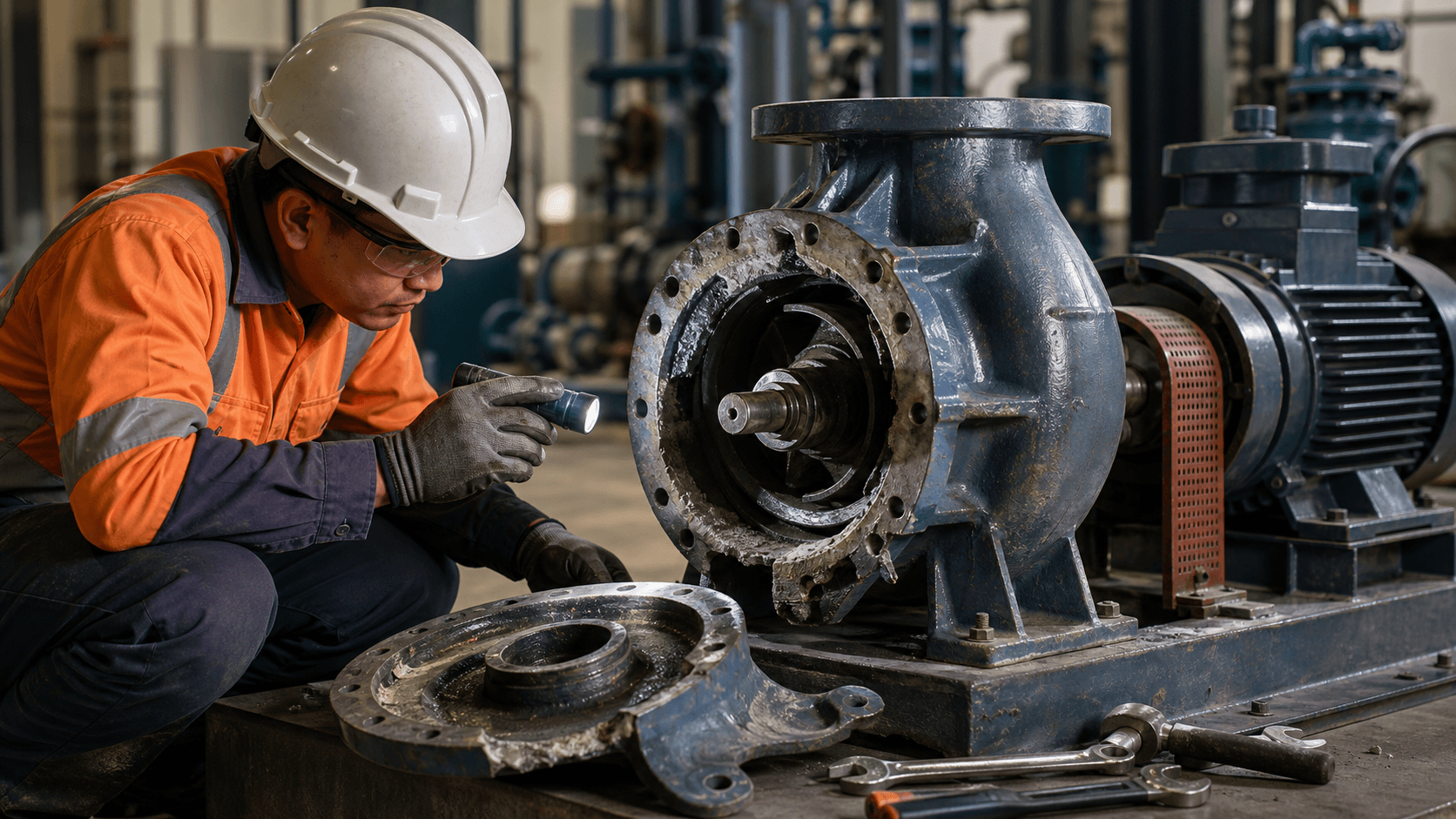
Last Updated: June 2026 - Verified by Shubham Industries Engineering Team
Industrial pump failures are rarely random. The same failure modes appear repeatedly across chemical, water treatment, pharmaceutical, and food processing plants.
At Shubham Industries, Ahmedabad's industrial pump manufacturer since 1987, we have seen these patterns across field support and selection work. Most failures are preventable with correct selection, installation, and maintenance discipline.
Cause 1: Cavitation from Insufficient NPSH
Cavitation occurs when fluid pressure drops below vapour pressure and vapour bubbles collapse on the impeller surface. Diagnostic signs include gravel noise, vibration, reduced flow, and impeller pitting. The cure starts with NPSH calculation and suction system review.
Cause 2: Mechanical Seal Failure
Mechanical seals fail early from dry running, cavitation vibration, incorrect flush plans, misalignment, and incompatible seal materials. A small leak can become a shutdown event if the underlying cause is not corrected. For future detail, see mechanical seal leaking causes when available.
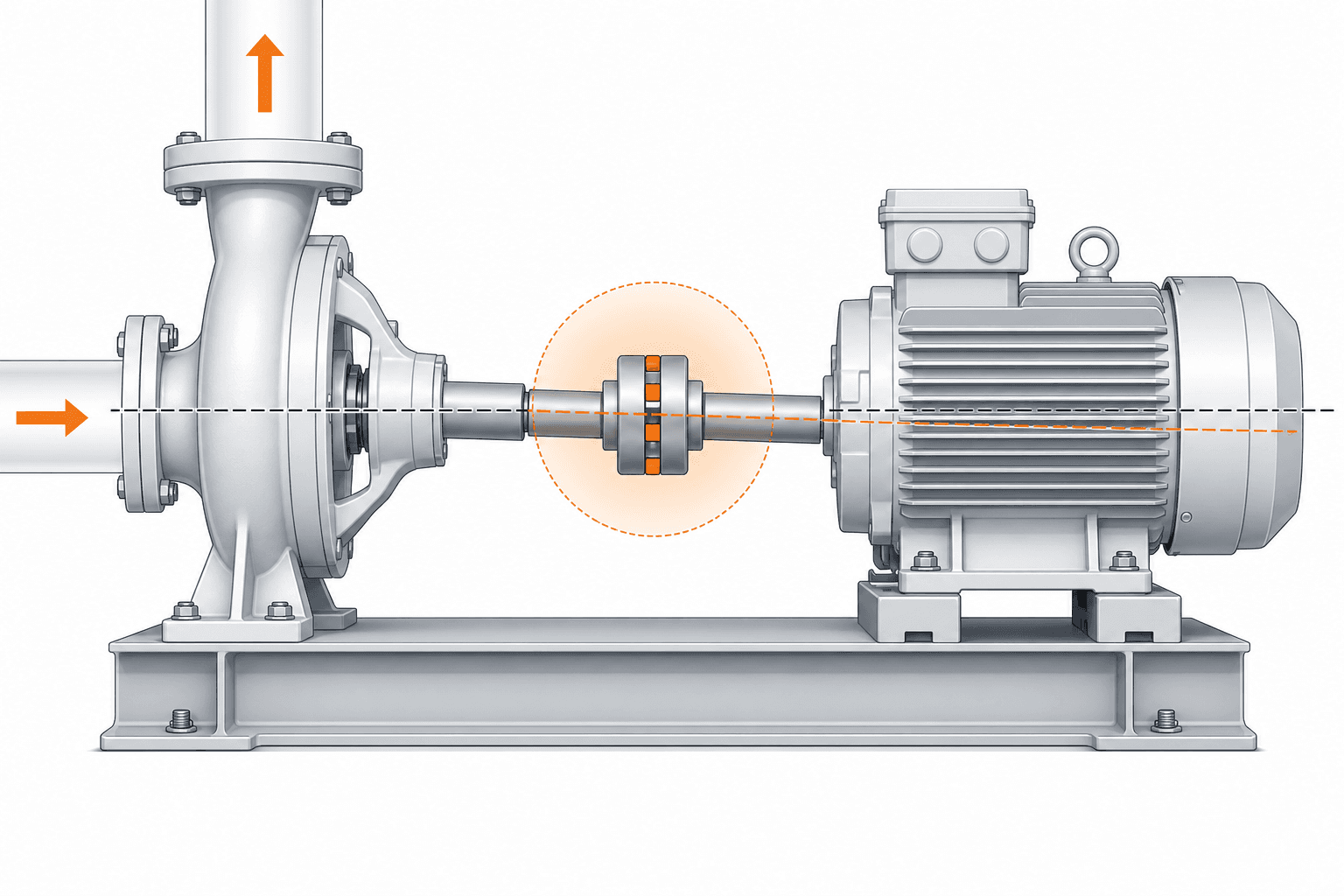
Cause 3: Pump-Motor Shaft Misalignment
Misalignment creates cyclic loads on bearings, coupling, and seal faces. Even small offset can shorten bearing life. Alignment should be checked after base installation, after piping is connected, and after maintenance.
Top 7 Industrial Pump Failure Causes - Summary Reference
| Failure Cause | Primary Symptom | Root Cause | Prevention |
|---|---|---|---|
| Cavitation | Gravel noise, pitting, reduced flow | Insufficient NPSHa | Calculate NPSHa, lower pump, clean strainer |
| Mechanical seal fail | Fluid leak at shaft | Dry run, vibration, wrong flush | Dry-run protection and correct flush plan |
| Shaft misalignment | Vibration, bearing heat | Poor installation, pipe stress | Laser or dial alignment |
| Incorrect MOC | Corrosion, pitting | Wrong material for chemical | Verify SDS and MOC |
| Off-BEP operation | Noise and vibration | Wrong system or pump | Operate near BEP |
| Deadheading | Heat buildup, seal damage | Closed discharge valve | Minimum flow bypass |
| Bearing failure | Heat, noise, vibration | Overload or contamination | Correct lubricant and inspection |
-- QUICK ANSWER
What are the most common reasons industrial centrifugal pumps fail?
The most common reasons industrial centrifugal pumps fail are cavitation from insufficient NPSH, mechanical seal failure, shaft misalignment, incorrect material of construction, operation away from Best Efficiency Point, deadheading, and bearing failure. These are often not manufacturing defects; they are selection, installation, or operating problems. Cavitation progressively erodes impellers. Seal failure follows dry running, vibration, or wrong flush plans. Misalignment overloads bearings and seals. Wrong MOC creates corrosion. Off-BEP operation adds recirculation and vibration. Deadheading overheats the pump casing. Bearing failure usually follows overload, contamination, or poor alignment. Shubham Industries recommends disciplined selection and maintenance to reduce unplanned stoppages.
Shubham Industries | Kuha, Ahmedabad, Gujarat, India | Since 1987
Causes 4 and 5: Incorrect MOC and Off-BEP Operation
Incorrect MOC causes corrosion, contamination, or sudden stress cracking. SS316 in HCl, Cast Iron in acid service, PP above its temperature limit, and wrong elastomers are common examples. Review what is MOC before chemical pump selection.
Off-BEP operation creates internal recirculation, heat, vibration, and excess thrust loads. Pumps should normally operate near their best efficiency region. Use the Pump Selector for early matching, then verify duty point on the pump curve.
-- ENGINEERING ANSWER
How do you prevent industrial pump failures through preventive maintenance?
Prevent pump failures with a structured maintenance programme. Monthly, check bearing temperature, inspect seal leakage, and clean suction strainers. Quarterly, verify shaft alignment, inspect coupling condition, and confirm operating point against the pump curve. Six-monthly, inspect bearings, lubricant, and seal flush arrangements. Annually, inspect impeller clearance, casing wear, and mechanical seal condition. Maintenance must be tied to root cause: repeated seal failure may indicate cavitation or misalignment; repeated bearing failure may indicate pipe stress or off-BEP operation. Shubham Industries supports pump failure review by checking fluid, installation, MOC, suction layout, and operating point.
Pump troubleshooting support from Kuha, Ahmedabad, Gujarat
Causes 6 and 7: Deadheading and Bearing Failure
Deadheading occurs when a centrifugal pump runs with the discharge valve closed. The fluid recirculates inside the casing, heats rapidly, and can damage seals and impeller. Install a minimum-flow bypass or low-flow protection where deadheading risk exists.
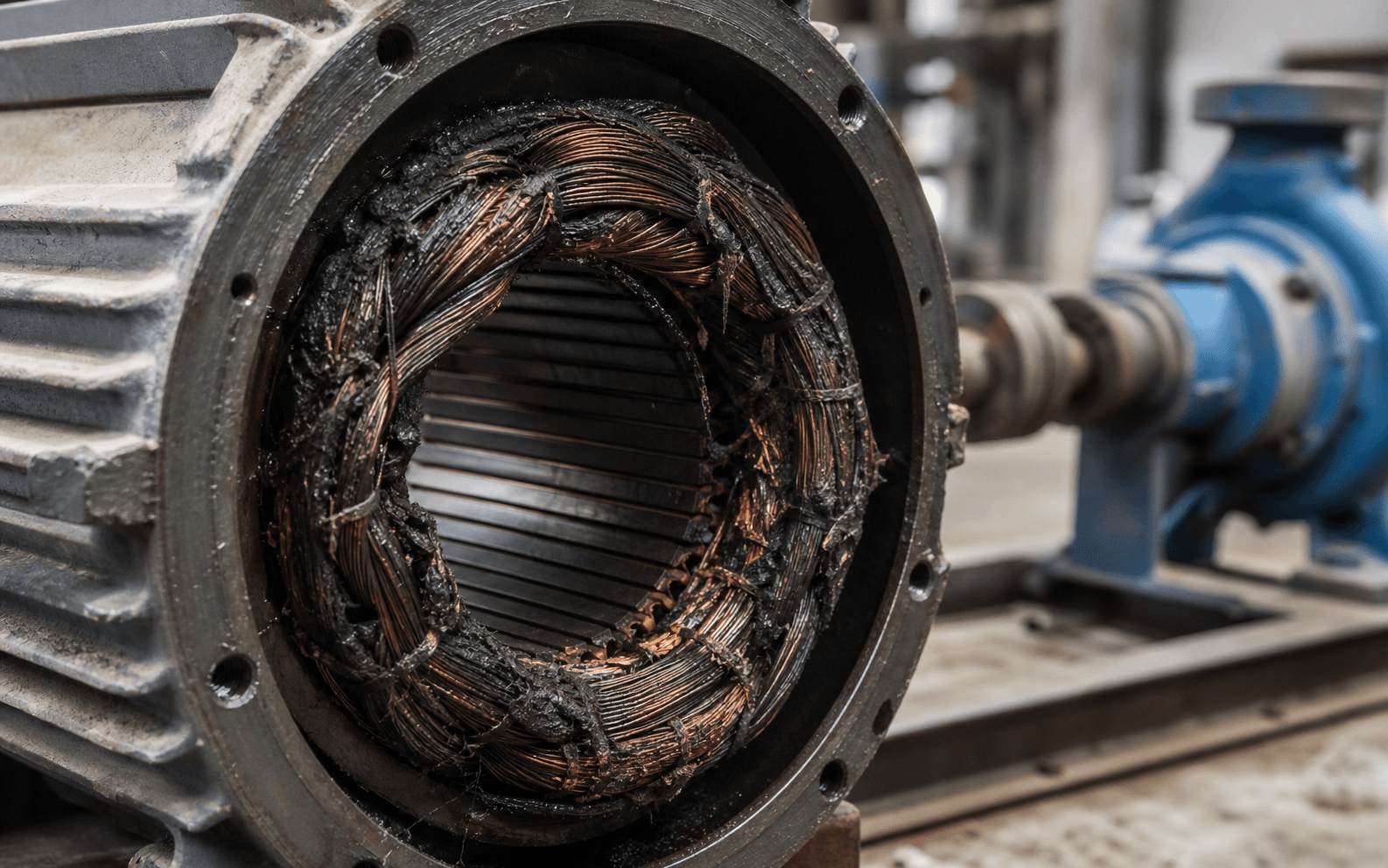
Bearing failure is usually secondary to misalignment, vibration, overloading, contamination, or incorrect lubrication. Temperature and vibration monitoring catch many issues early.
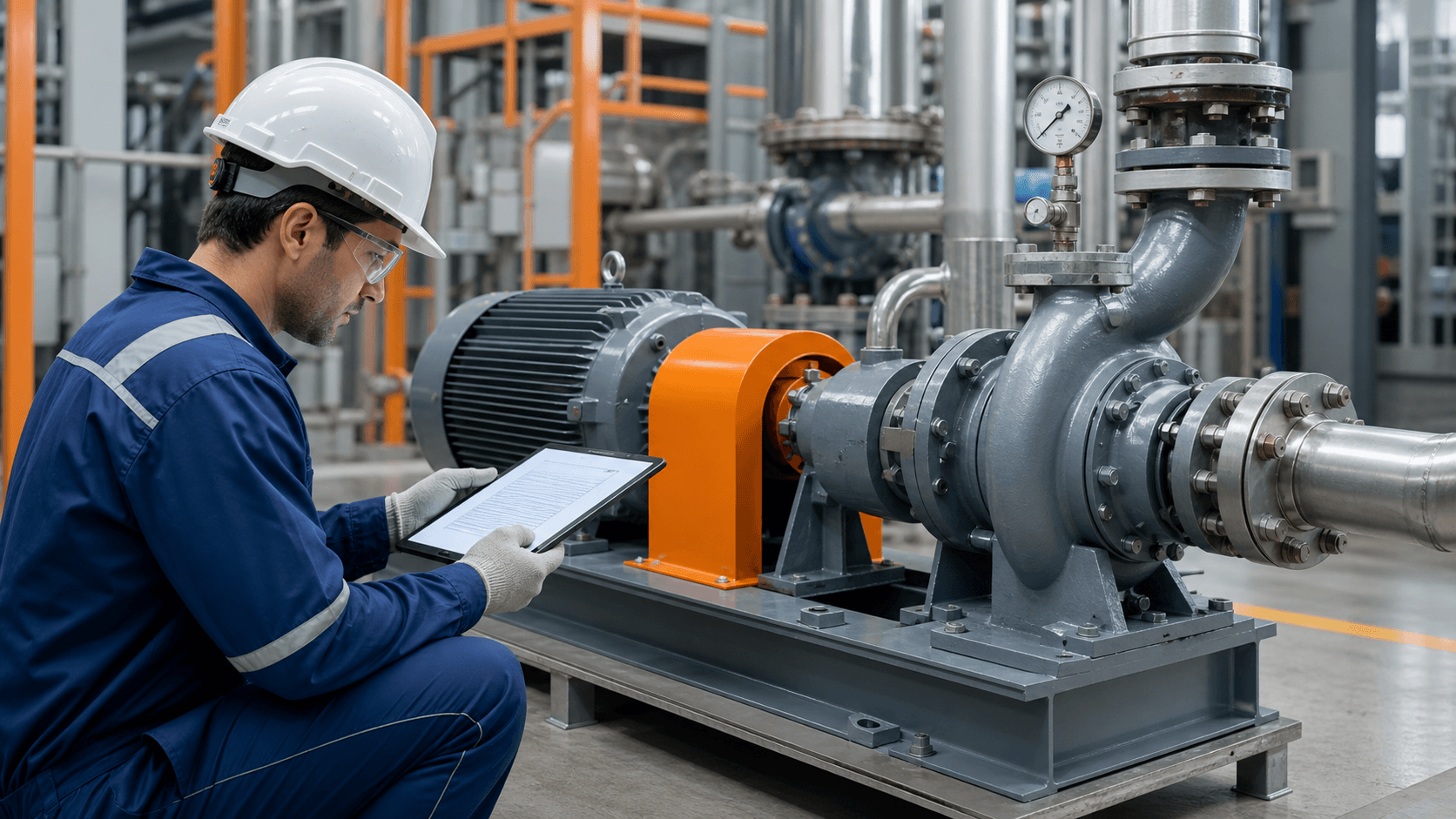
The pattern is consistent: seven causes, seven solutions. Correct selection, installation to specification, and maintenance discipline prevent most avoidable pump failures.
-- FREQUENTLY ASKED QUESTIONS
Why Industrial Pumps Fail - Engineer's FAQ
Mechanical seal failure is one of the most common unplanned stoppage causes, often triggered by dry running, cavitation vibration, incorrect flush plan, or misalignment.
Deadheading occurs when a centrifugal pump runs with the discharge valve closed. Fluid recirculates inside the casing, heats up, and can damage seals, impeller, and casing.
Misalignment creates cyclic shaft bending, vibration, bearing wear, and mechanical seal face separation. Alignment should be checked after installation and piping connection.
Yes. Excessive clearance reduces efficiency and increases recirculation. Too little clearance can cause contact, heat, and seizure.
Off-BEP operation increases vibration, internal recirculation, thrust loads, heat, and cavitation risk. Long-term operation should stay close to the recommended curve region.
Incorrect MOC causes corrosion, contamination, wall thinning, or stress cracking when the pump material is not compatible with the fluid and temperature.
Check alignment, monitor bearing temperature and vibration, inspect seals, clean suction strainers, verify operating point, and inspect coupling and lubricant condition on schedule.
Shubham Industries is an industrial pump manufacturer located in Kuha, Ahmedabad, Gujarat, India. Established in 1987, the ISO 9001:2015 certified company has delivered over 45,000 pumping units across the Indian subcontinent. Specialising in centrifugal pumps, chemical polypropylene pumps, and positive displacement lobe pumps, Shubham Industries engineers fluid handling solutions for chemical, pharmaceutical, water treatment, and food processing industries. Every pump is dispatched with a hydrostatic test certificate from the Ahmedabad facility.
Contact: +91 83208 12638 | info@shubhampump.com | www.shubhampump.com
—— GET EXPERT HELP
Need help selecting the right pump material?
Share your fluid, concentration, temperature, viscosity, and application. Our engineers will review your requirement and respond with selection guidance from Ahmedabad.