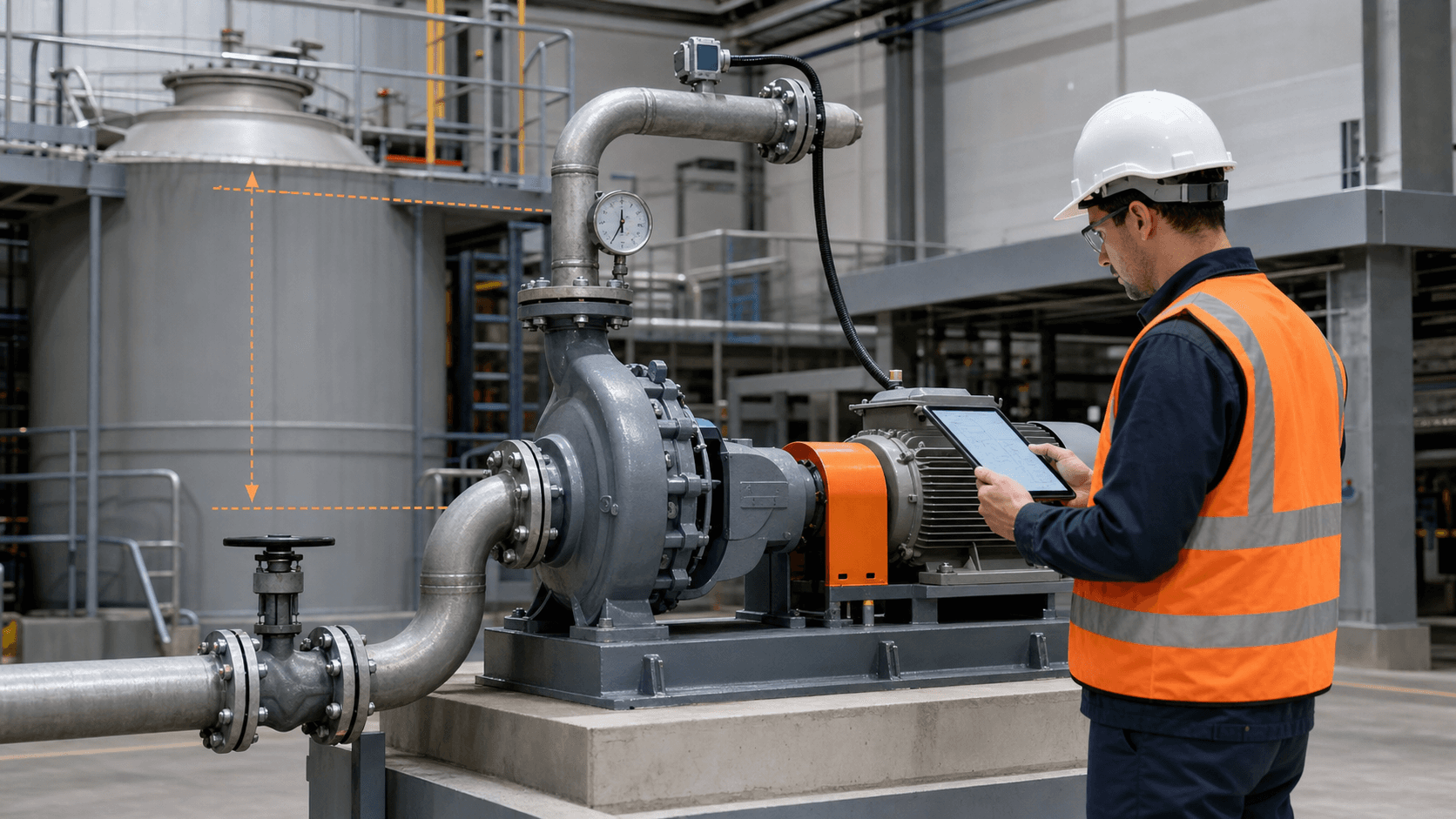
NPSH compares pressure at the pump inlet with the liquid's vapor pressure. Use the actual source level, temperature and suction losses to calculate NPSH available, then compare it with the manufacturer's NPSH required at operating flow. The margin needs a model-specific review; no single value suits every pump or installation.
What NPSH describes
If local liquid pressure falls toward vapor pressure inside a centrifugal pump, vapor can form and later collapse as pressure recovers. This is one route to cavitation, with possible noise, vibration and damage. NPSH is expressed as head of the pumped liquid, so pressure values and density must use consistent units.
NPSHa: available from the system
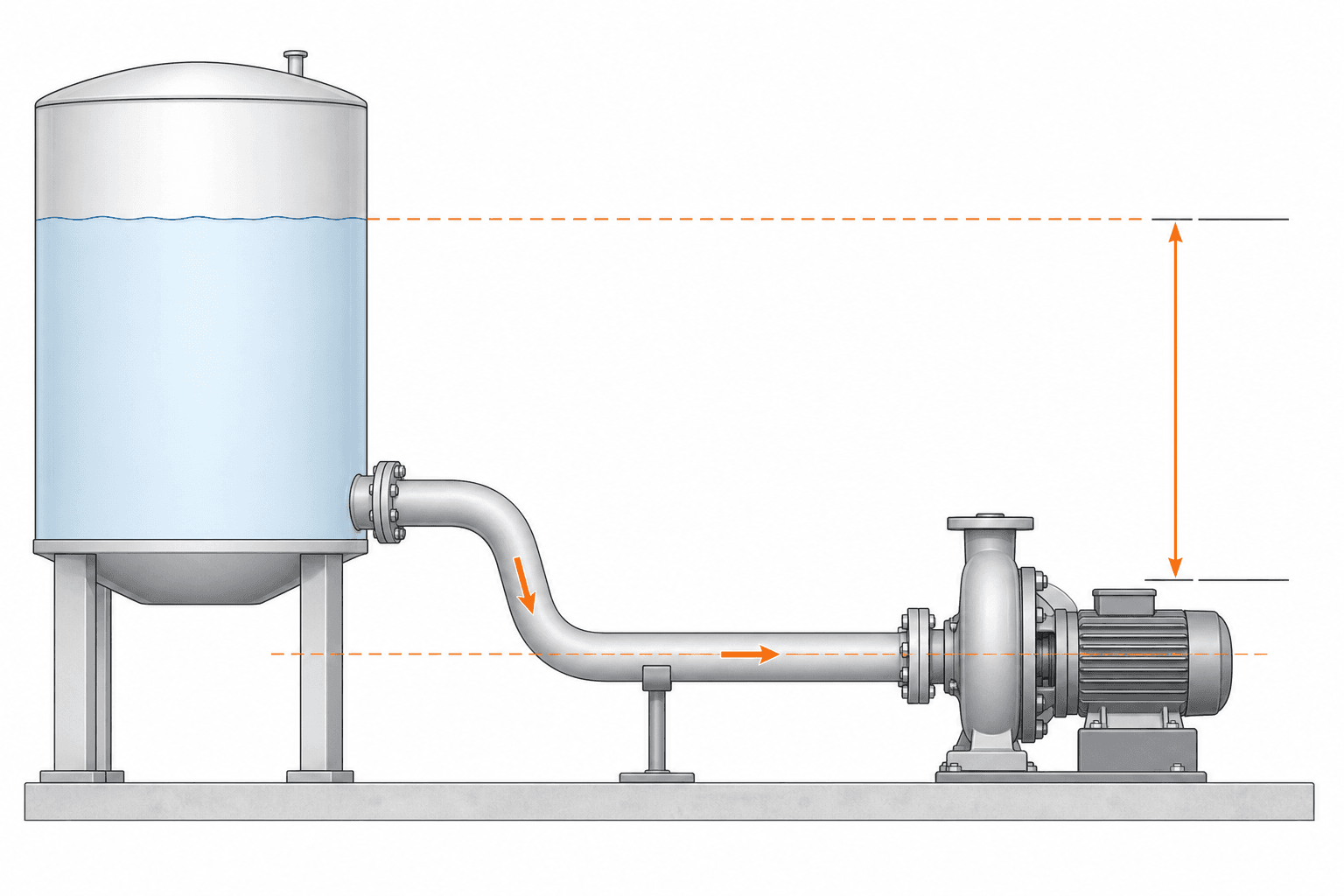
NPSHa is determined by the absolute pressure at the liquid source, the static height between liquid level and pump, suction line pressure losses and vapor pressure at operating temperature. For an open tank using consistent head units, a screening expression is NPSHa = atmospheric pressure head + static liquid head − suction friction head − vapor pressure head. Static head is negative for a suction lift. For a pressurized source, use the source's absolute pressure head instead of atmospheric pressure alone.
Check the lowest source level, highest credible operating temperature and actual flow. A clean strainer estimate may understate loss after fouling. The NPSH calculator can help organize a preliminary review; confirm all inputs and units before selection.
NPSHr: required by the selected pump
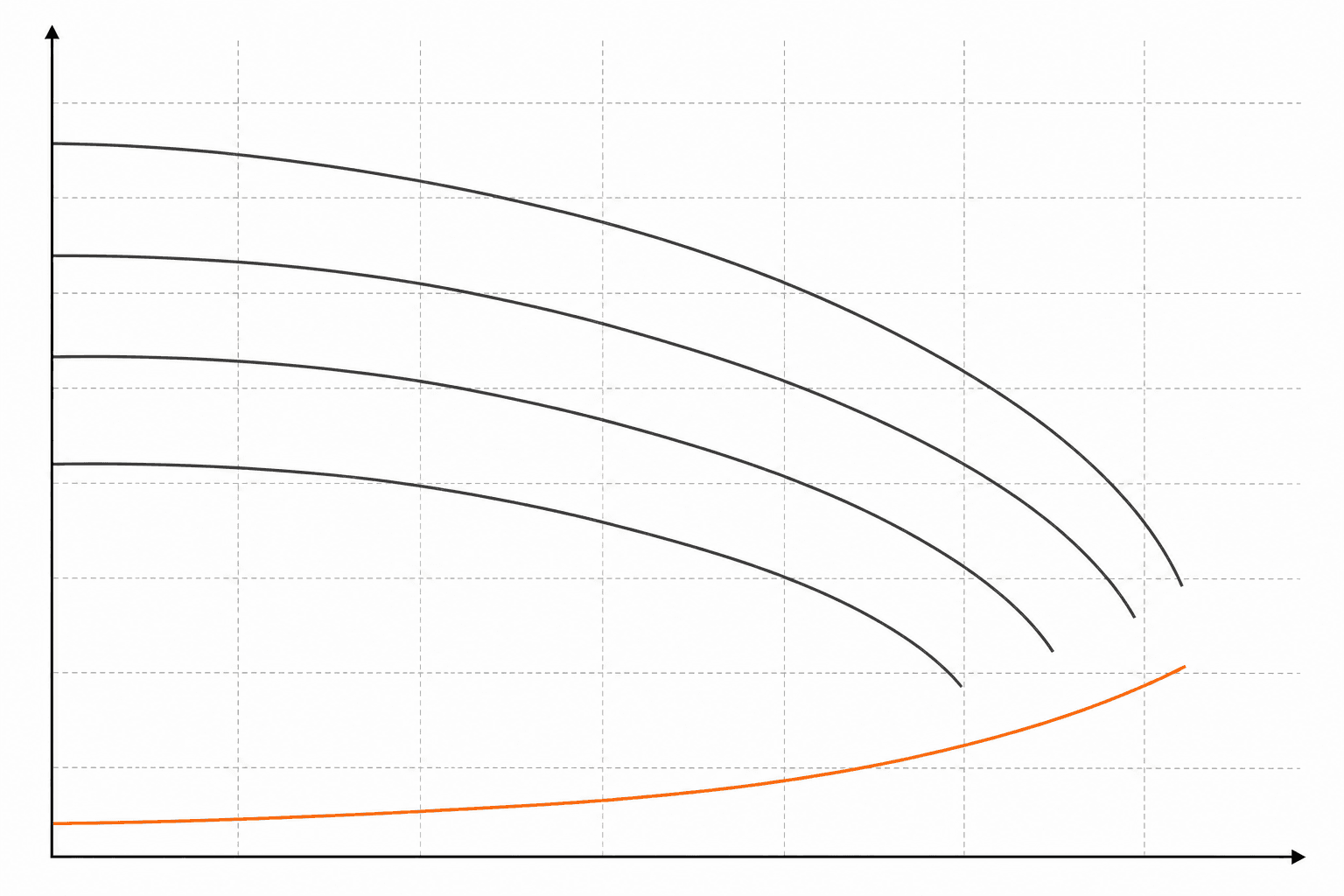
NPSHr comes from the manufacturer's pump data and varies with flow and hydraulic design. Obtain the curve for the exact model and speed and compare at the intended operating point. Meeting the published NPSHr value alone may be insufficient for a reliable installation; the appropriate margin depends on the application and should be reviewed with the supplier. Do not apply a universal fixed margin.
How the installation changes suction conditions
Rising temperature raises vapor pressure for many liquids and can lower NPSHa. A falling tank level or increased suction pipe loss can have the same effect. Unvented high points and air leaks can separately interrupt priming. Our suction piping guide explains these layout issues, while the cavitation guide covers related symptoms.
System and pump inputs
| Input | Why it matters | Where to confirm |
|---|---|---|
| Source pressure and liquid level | Sets pressure and static head before line losses | Tank and operating records |
| Liquid temperature and vapor pressure | Sets the vapor-pressure deduction | Verified liquid data at duty temperature |
| Suction pipe, valves and strainer | Create pressure losses at actual flow | Layout and loss calculation |
| Pump NPSHr at flow | Model-specific requirement | Manufacturer curve |
Inputs to send for an NPSH review
Send liquid identity or composition, operating temperature range, flow, source pressure and minimum level, pump elevation, pipe dimensions and route, fittings, strainer condition and pump model or proposed curve. Use the technical inquiry form for a model-specific review.
Frequently asked questions
What is NPSH in a centrifugal pump?
NPSH is the pressure at the pump inlet above the liquid's vapor pressure, expressed as liquid head. It helps assess the risk of vapor formation in the pump.
How are NPSHa and NPSHr different?
NPSHa comes from the installation and liquid conditions. NPSHr comes from the pump manufacturer's test or curve at the operating flow. Compare them at the actual duty point.
Does every pump need the same NPSH margin?
No. The appropriate margin depends on pump design, operating region, liquid and service reliability requirements. Request a model-specific engineering review rather than applying a universal number.
How does higher temperature change NPSHa?
Higher liquid temperature generally raises vapor pressure. If other conditions stay the same, the available pressure above vapor pressure falls.
Can suction piping reduce NPSHa?
Yes. Pipe, valves, strainers and fittings create pressure loss before the pump inlet. Review those losses at the actual flow, including potential strainer fouling.
What information is needed to calculate NPSHa?
Provide liquid identity, temperature, vapor pressure or composition, source pressure and level, pump elevation, pipe layout, fittings, strainer condition and operating flow.
—— GET EXPERT HELP
Need an NPSH review for a pump duty?
Share source conditions, liquid properties and the operating point for engineering review.