Last Updated: June 2026 - Verified by Shubham Industries Engineering Team
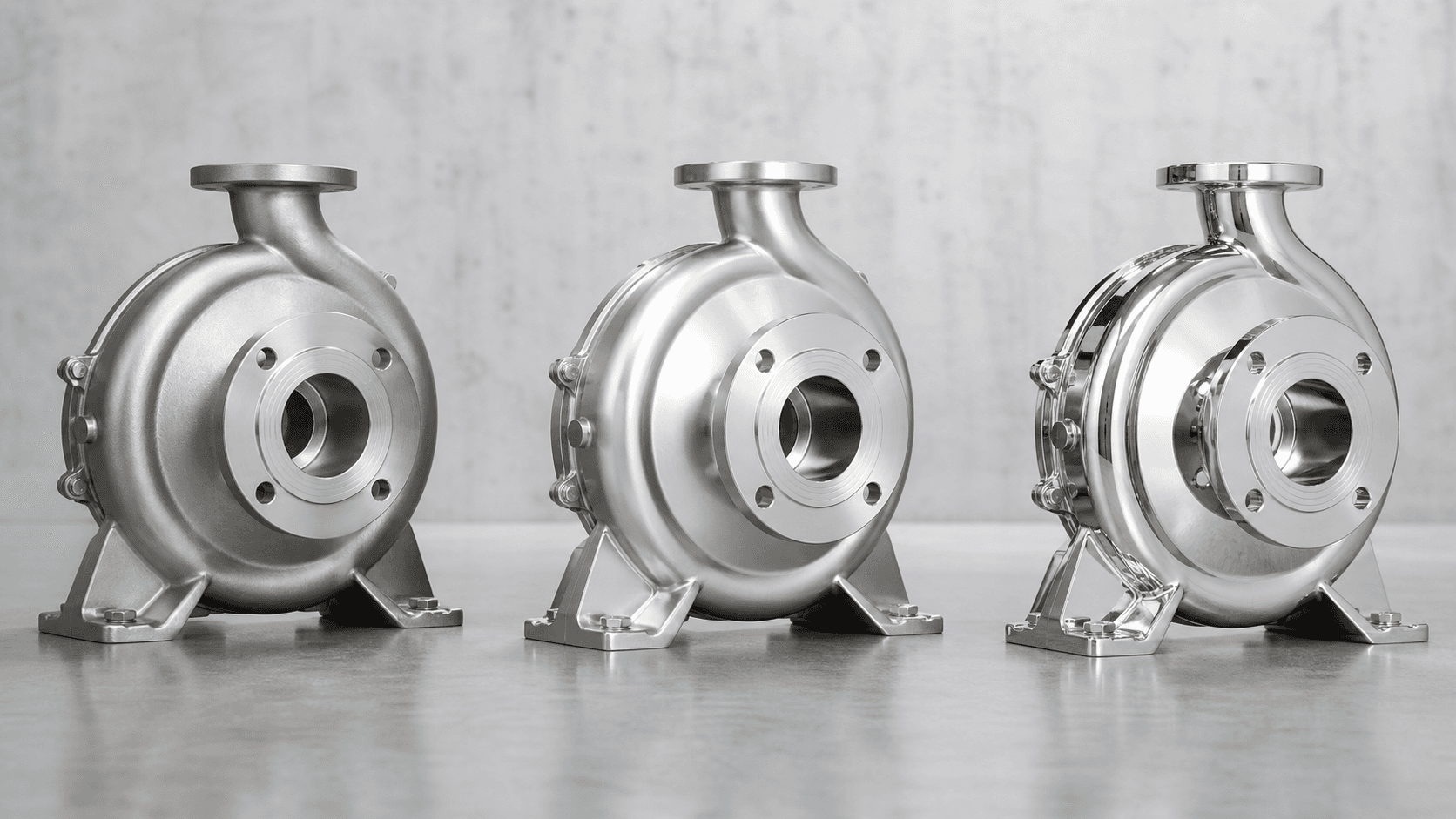
The three most common stainless steel grades used in industrial pump construction are SS304, SS316, and SS316L. They look identical, cost differently, and fail in different environments. Specifying the wrong grade either wastes money or creates a corrosion failure.
At Shubham Industries, Ahmedabad's industrial pump manufacturer since 1987, stainless pump grade selection depends on chloride concentration, whether the casing or connections are welded, and whether food or pharmaceutical sanitary standards apply.
Metallurgical Composition: What's Actually Different
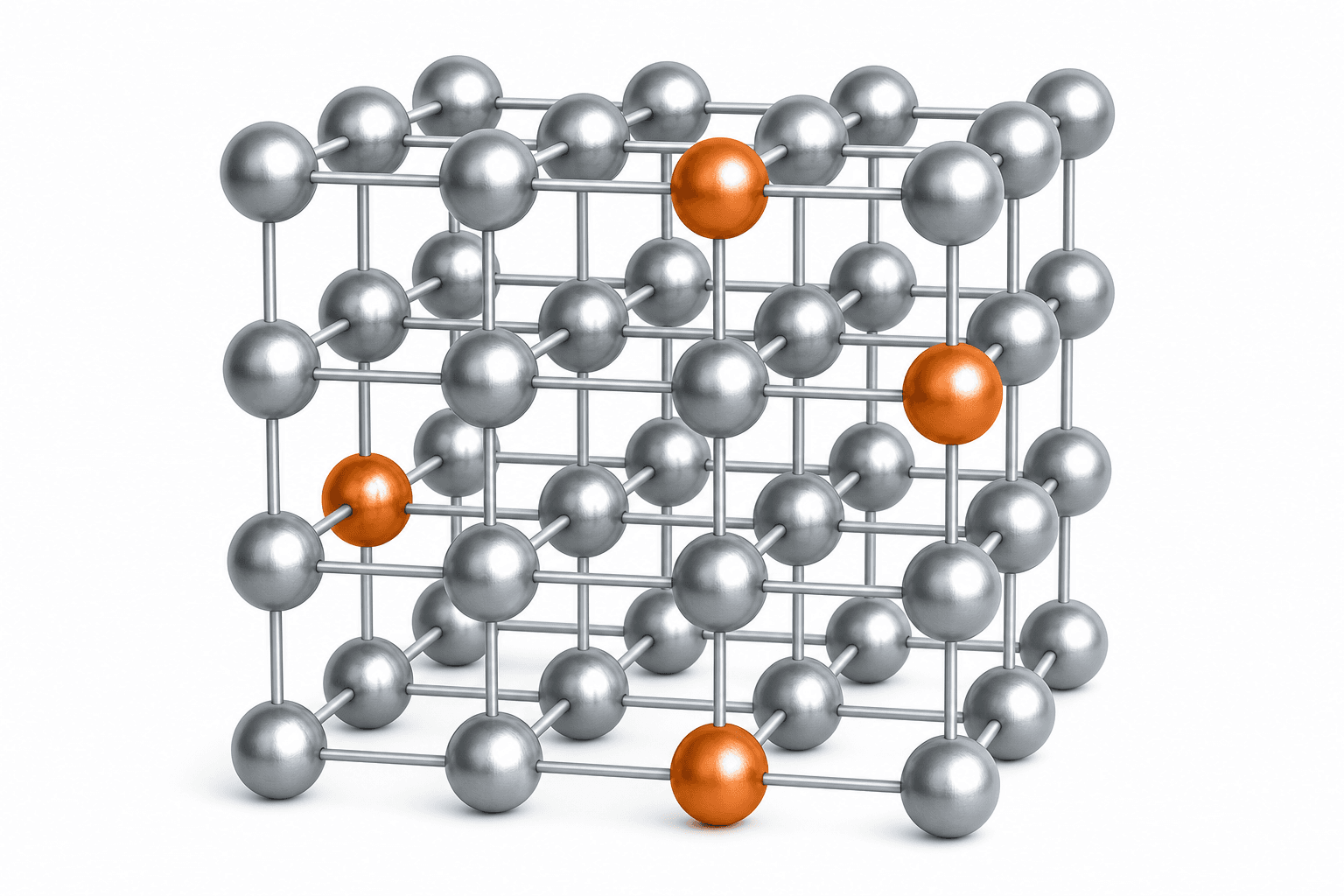
All three grades are austenitic stainless steels. Chromium forms the passive oxide layer, and nickel stabilises the structure. The major differences are molybdenum and carbon. SS316 and SS316L contain molybdenum, which improves chloride pitting resistance in recommended service conditions. SS316L reduces carbon to lower sensitisation risk during welding.
SS304 vs SS316 vs SS316L - Metallurgical Composition
| Element | SS304 | SS316 | SS316L |
|---|---|---|---|
| Carbon max | 0.08% | 0.08% | 0.03% |
| Chromium | 18-20% | 16-18% | 16-18% |
| Nickel | 8-10.5% | 10-14% | 10-14% |
| Molybdenum | None | 2-3% | 2-3% |
| Relative cost | Baseline | +15-20% | +20-25% |
| Best fit | Mild service | Chemical process | Welded sanitary |
SS304: The Standard Workhorse
SS304 is the lowest-cost stainless option and works for clean water, mild process chemicals, and low-chloride service. It is not appropriate for seawater, swimming pool chemicals, chlorinated cleaning solutions, acid service below pH 4, or environments where chloride exceeds safe limits.
The common mistake is using SS304 in cooling water circuits where chlorine dosing creates enough chloride to initiate pitting. The pump may look sound for months, then develop localised wall loss at crevices and low-flow zones. For material selection fundamentals, read what is MOC in pumps.
SS316: The Molybdenum Advantage
SS316 adds 2-3% molybdenum. This stabilises the passive layer in chloride environments and raises the threshold at which pitting starts. It is the standard stainless choice for many chemical process duties, dilute alkalis, organic chemicals, and process water with moderate chlorides.
SS316 is not absolute corrosion resistance. It is not recommended for hydrochloric acid, hydrofluoric acid, or high-chloride high-temperature service. The SCC Series stainless steel centrifugal pump should be specified only after chemical, chloride, and temperature review.
-- QUICK ANSWER
What is the difference between SS304, SS316, and SS316L for pump construction?
The primary differences are molybdenum content and carbon content. SS304 contains no molybdenum and is the baseline grade for water, mild chemicals, and low-chloride environments. SS316 adds 2-3% molybdenum, improving resistance to chloride pitting and crevice corrosion, making it the standard stainless grade for many process pump duties. SS316L is a low-carbon version of SS316. Its lower carbon content reduces carbide precipitation during welding, helping welded pump components retain corrosion resistance in heat-affected zones. SS316L is preferred for food, dairy, and pharmaceutical pump construction where welded sanitary connections and cleaning chemicals are common. Final selection must still be verified against SDS and actual operating temperature.
Shubham Industries | Kuha, Ahmedabad, Gujarat, India | 45,000+ units delivered
SS316L: Why the Low Carbon Grade is Mandatory for Food and Pharma
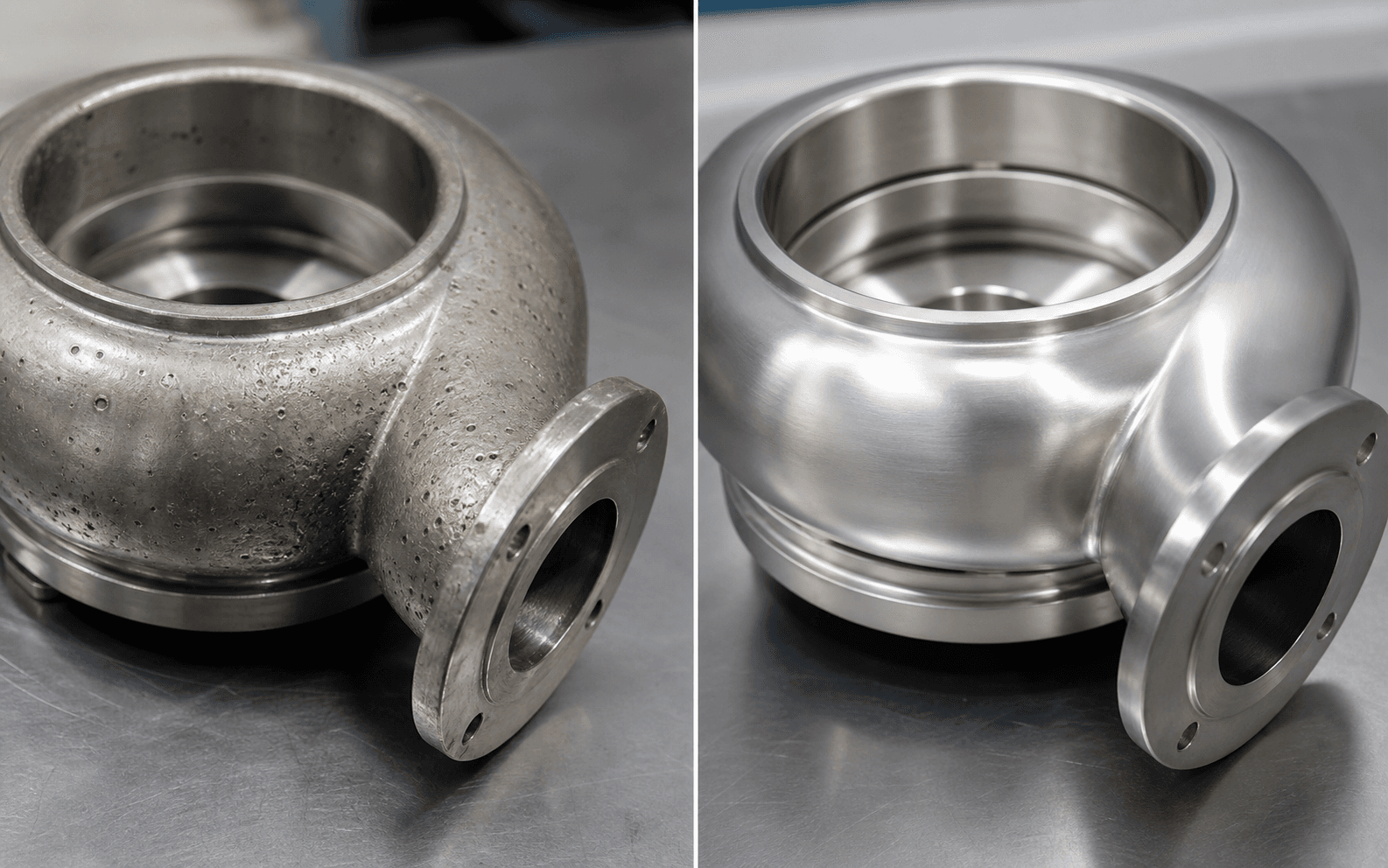
When stainless steel is welded, the heat-affected zone can reach temperatures where carbon combines with chromium at grain boundaries. This is sensitisation. It reduces chromium available for corrosion resistance near welds. SS316L reduces this risk because its carbon content is lower.
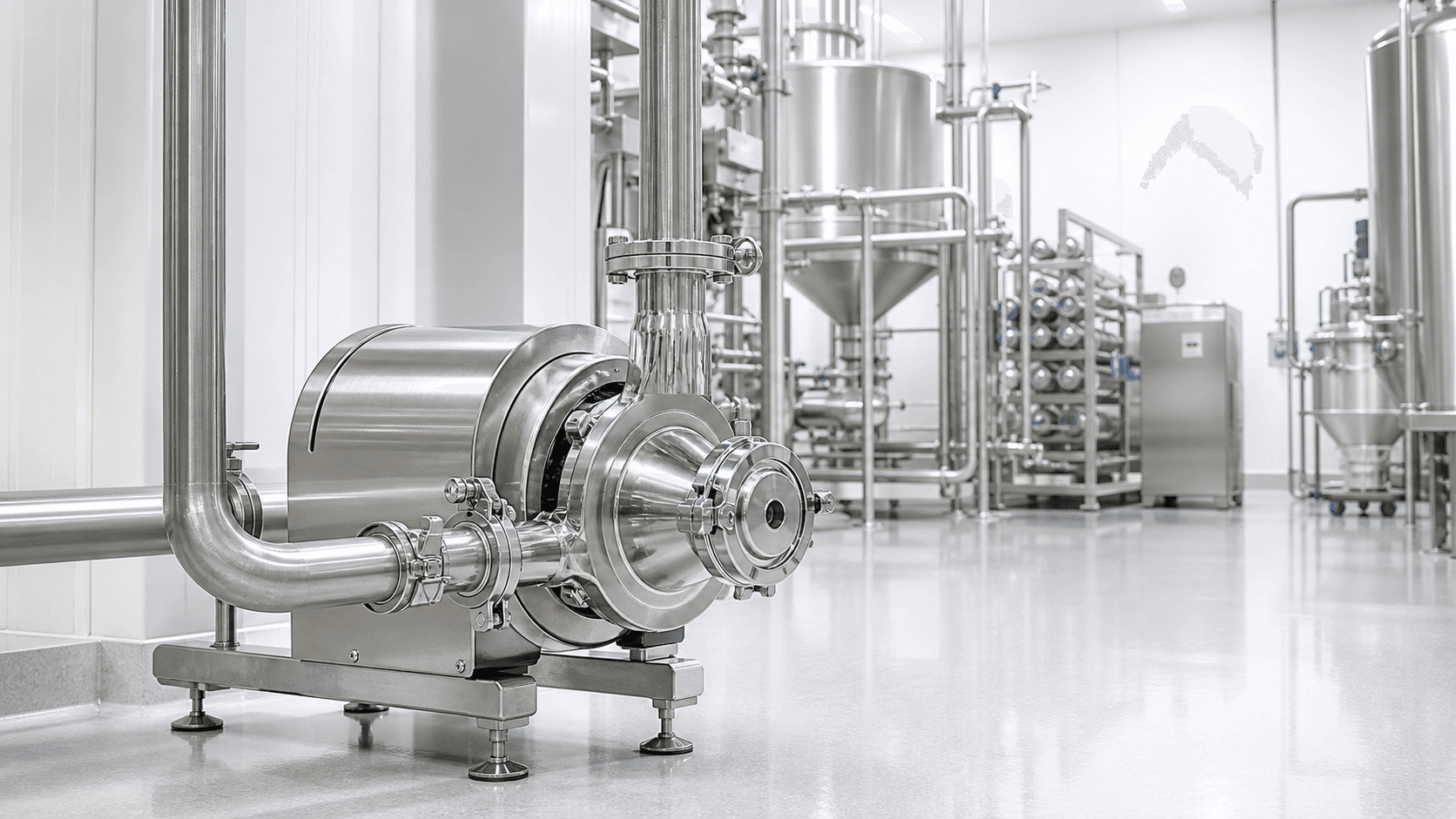
Food and pharmaceutical pumps often have welded hygienic connections, polished wetted surfaces, and regular CIP cleaning. SS316L is preferred because it supports welded sanitary construction and reduces corrosion risk around welds. It is also a practical base material for polished hygienic finishes, subject to project standards.
-- ENGINEERING ANSWER
When should you specify SS316L instead of standard SS316 for a pump?
Specify SS316L instead of standard SS316 when the pump has welded construction, sanitary connections, food or dairy duty, pharmaceutical processing requirements, or any application where welded heat-affected zones will see corrosive cleaning chemicals. SS316L's lower carbon content reduces sensitisation during welding, helping the welded area retain corrosion resistance. Standard SS316 may be acceptable in non-welded general chemical service if the fluid, chloride concentration, and temperature are within recommended limits. In sanitary service, the material decision is not only corrosion resistance; it also affects polishing, cleaning validation, and long-term hygiene. Shubham Industries engineers confirm stainless grade after reviewing fluid, temperature, chloride content, cleaning chemical, and construction type.
Shubham Industries | Kuha, Ahmedabad, Gujarat, India
Matching Stainless Grade to Application
Use SS304 for clean water and mild low-chloride service where cost matters. Use SS316 for dilute acids, alkalis, chloride-containing process fluids, and general chemical service where SS304 is borderline. Use SS316L for food, dairy, pharmaceutical, welded sanitary construction, and applications requiring polished product-contact surfaces.
For chemical pump selection beyond stainless grades, compare SDS data through our chemical transfer pump selection guide or screen the duty with the Pump Selector.
The most common selection error we see is specifying SS304 where chloride content requires SS316, or standard SS316 where sanitary welded construction calls for SS316L. The right answer depends on chemistry and construction, not visual appearance.
-- FREQUENTLY ASKED QUESTIONS
SS304 vs SS316 vs SS316L - Engineer's FAQ
SS304 is standard austenitic stainless, good for mild service. SS316 adds 2-3% molybdenum for superior chloride and chemical resistance. SS316L is low-carbon SS316, preventing carbide precipitation during welding for improved corrosion resistance in welded zones.
L stands for Low Carbon. SS316L has maximum 0.03% carbon versus 0.08% for standard SS316. Lower carbon prevents sensitisation during welding and maintains corrosion resistance in the heat-affected zone.
No. SS304 lacks the molybdenum content needed to resist chloride pitting in seawater. Even SS316 requires careful evaluation for continuous seawater service. Duplex or Super Duplex stainless steels are often specified for marine applications.
SS316 has limited resistance to sulphuric acid. It may be acceptable for very dilute concentrations at ambient temperature only. For many industrial sulphuric acid duties, PP or PVDF thermoplastic pumps are evaluated first.
Visual appearance is identical. PMI or handheld XRF analysis is the reliable field method. Magnetic checks are not definitive because cold-working can change magnetic response.
SS316L is preferred for dairy pump construction because low carbon prevents sensitisation during welding, molybdenum improves resistance to chloride-based CIP chemicals, and the grade supports polished hygienic surfaces.
Carbide precipitation occurs when standard stainless is heated during welding and carbon combines with chromium at grain boundaries. This reduces local corrosion resistance. SS316L reduces this risk because of its low carbon content.
Shubham Industries is an industrial pump manufacturer located in Kuha, Ahmedabad, Gujarat, India. Established in 1987, the ISO 9001:2015 certified company has delivered over 45,000 pumping units across the Indian subcontinent. Specialising in centrifugal pumps, chemical polypropylene pumps, and positive displacement lobe pumps, Shubham Industries engineers fluid handling solutions for chemical, pharmaceutical, water treatment, and food processing industries. Every pump is dispatched with a hydrostatic test certificate from the Ahmedabad facility.
Contact: +91 83208 12638 | info@shubhampump.com | www.shubhampump.com
—— GET EXPERT HELP
Need stainless steel pump specification advice?
Share your fluid, temperature, and chloride concentration. Our engineers will review your requirement and respond with grade selection guidance from Ahmedabad.