Last Updated: June 2026 - Verified by Shubham Industries Engineering Team
Caustic soda, or sodium hydroxide, is used across chemical manufacturing, textile processing, water treatment, and soap production. It is strongly alkaline and creates a different pump selection problem from acid transfer.
At Shubham Industries, Ahmedabad's industrial pump manufacturer since 1987, NaOH pump selection focuses on MOC, concentration, temperature, crystallisation during shutdown, and seal face compatibility.
Understanding Sodium Hydroxide Properties
NaOH has pH 13-14 across practical concentrations. Specific gravity rises with concentration, so motor power must be checked for concentrated solutions. Heat of dilution is significant; adding water to concentrated caustic can generate heat and thermal stress.
Managing the Crystallisation Risk of NaOH
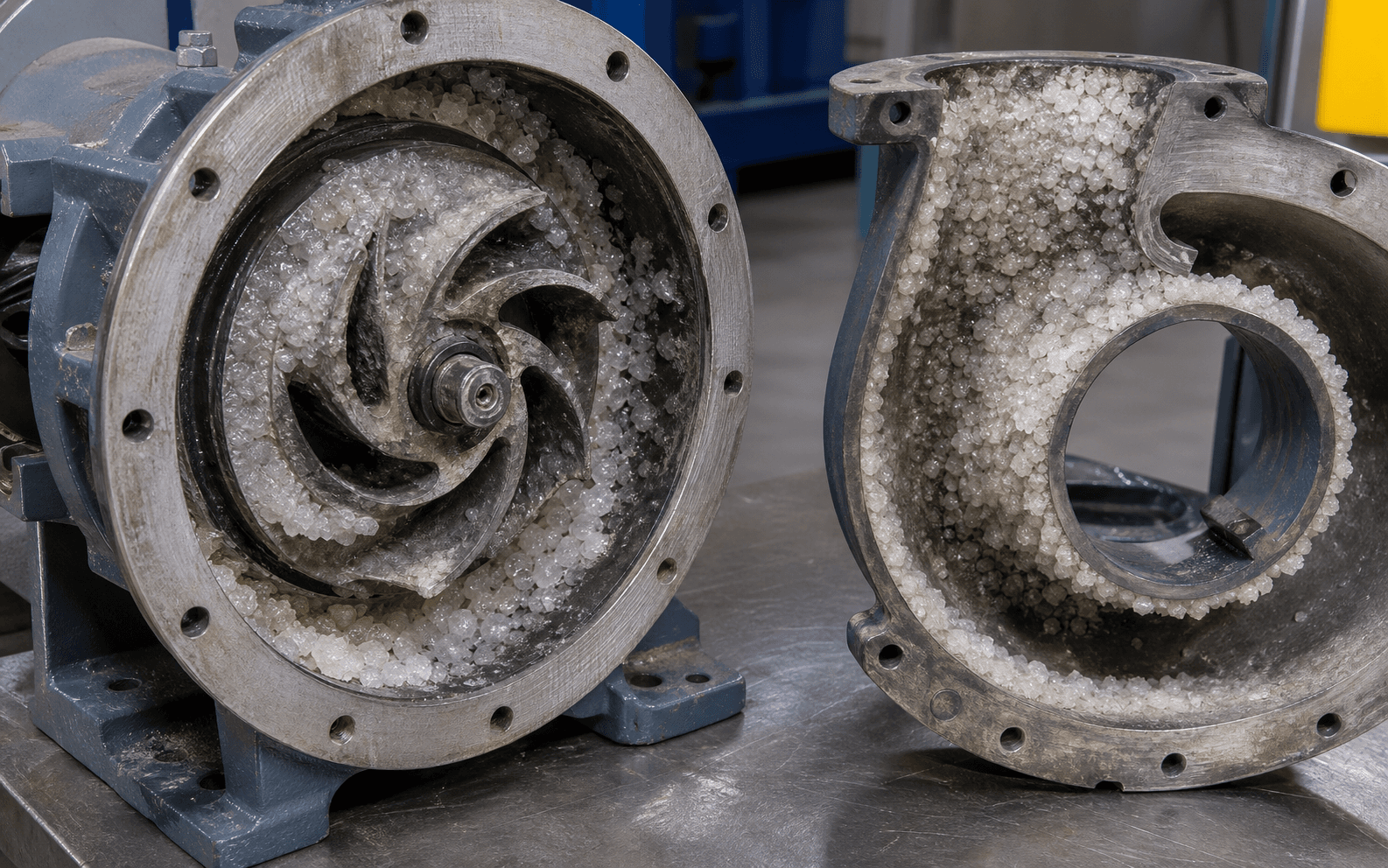
Concentrated NaOH solutions crystallise when cooled below their saturation temperature. A 50% solution can crystallise near temperatures seen during cool shutdown conditions. Crystals can form around the impeller and seal, locking the rotating assembly.
Prevention includes heat tracing for concentrated duties, flushing before extended shutdown, verifying free rotation before restart, and maintaining pump temperature above the crystallisation point.
-- QUICK ANSWER
What pump material is best for caustic soda (NaOH) transfer?
The best pump material for caustic soda depends on solution concentration and operating temperature. For standard industrial concentrations at ambient temperature, SS316 stainless steel is the most commonly specified material and performs well in recommended service conditions. For dilute NaOH at ambient temperature, Polypropylene can be a cost-effective alternative with good chemical resistance. At elevated temperature or high concentration, selection must be checked against SDS and actual operating conditions. Aluminum, zinc, and tin must never be used because sodium hydroxide attacks amphoteric metals and can release hydrogen gas. Shubham Industries SCC Series and CPP Series pumps are evaluated for NaOH duties after reviewing concentration, temperature, and shutdown procedure.
Shubham Industries | Kuha, Ahmedabad, Gujarat, India | Since 1987
Recommended MOC: SS316 vs Polypropylene
SS316 is the standard material for many NaOH services because it handles temperature better than PP and provides structural strength for industrial pressures. The SCC Series is often evaluated for NaOH after checking concentration and temperature.
Polypropylene offers good NaOH resistance at ambient temperature and can be considered for dilute to moderate service. The CPP Series may be suitable where pressure and temperature remain within PP limits. For deeper material basics, see what is MOC.
NaOH Pump MOC Comparison by Concentration and Temperature
| NaOH Concentration | Temperature | Recommended MOC | Notes |
|---|---|---|---|
| 1-20% dilute | 20-40 deg C | PP or SS316 | Both acceptable after verification |
| 1-20% dilute | 40-80 deg C | SS316 | PP temperature limit may be reached |
| 20-50% standard | 20-40 deg C | SS316 | Standard industrial duty |
| 20-50% standard | 40-80 deg C | SS316 | Heat tracing if concentration is high |
| 50%+ concentrated | Any | SS316 | Verify actual temperature and SDS |
| Any concentration | Any | Aluminum | Never use; hydrogen release risk |
| Any concentration | Any | Carbon Steel | Generally not preferred |
The Danger of Reactive Metals: Aluminum and Carbon Steel
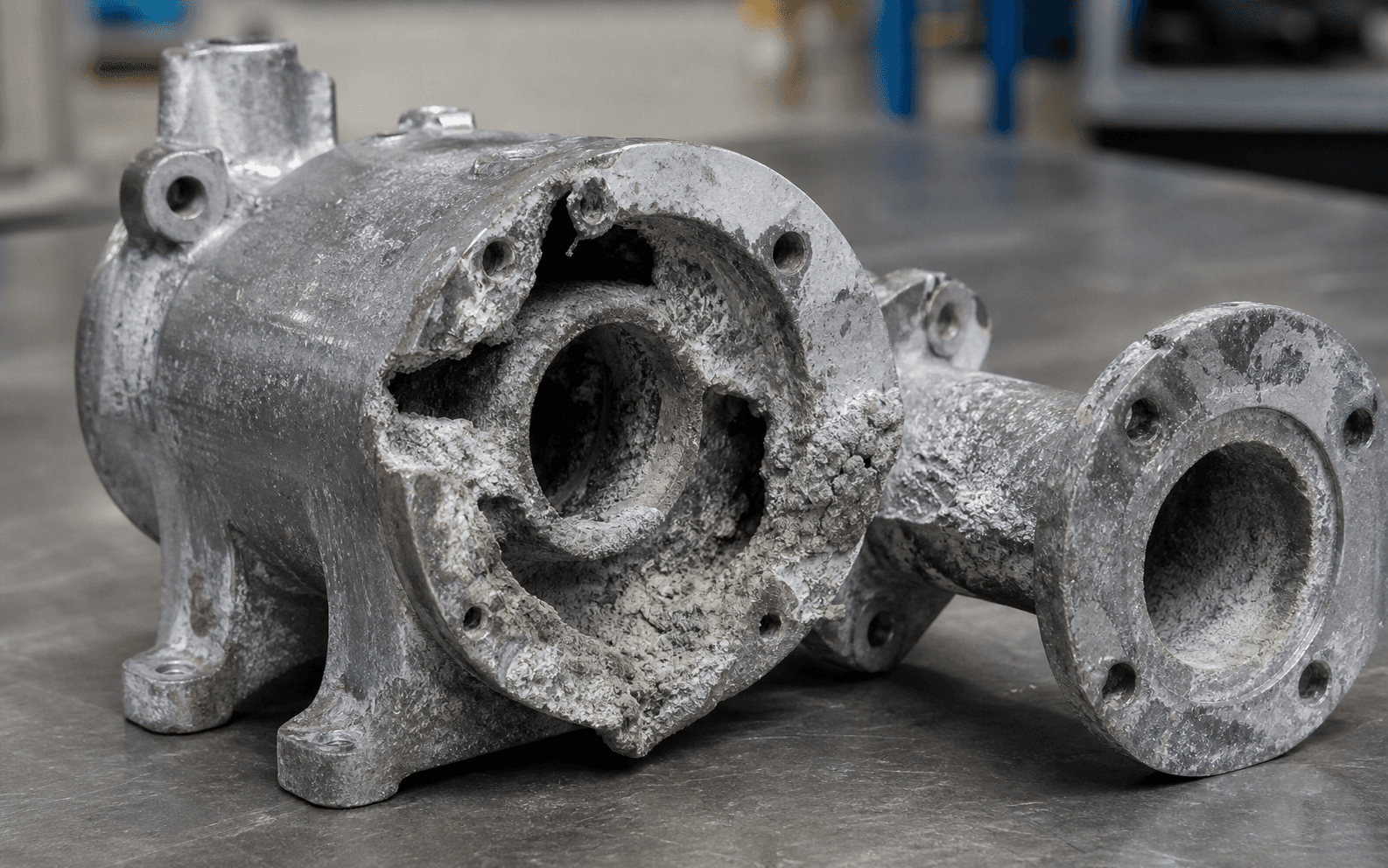
Aluminum reacts vigorously with NaOH, dissolving and releasing hydrogen gas. That creates both equipment damage and flammability risk. Aluminum pumps, valves, flanges, and piping are not acceptable for NaOH service.
-- ENGINEERING ANSWER
What is the crystallisation hazard of caustic soda in pumps?
Concentrated sodium hydroxide solutions can crystallise when cooled below their saturation temperature. If crystals form around a pump's impeller, shaft, or mechanical seal during shutdown, the rotating assembly can lock solid. Attempting to restart the pump against crystallised caustic can damage the shaft or seal. Prevention requires heat tracing for concentrated duties, flushing before long shutdowns, and checking that the pump rotates freely before restart after cool conditions. Shubham Industries recommends reviewing crystallisation risk for all NaOH services above 30% concentration, especially where overnight shutdown is common.
Shubham Industries | Kuha, Ahmedabad, Gujarat
Mechanical Seal Specifications for NaOH Service
Silicon Carbide versus Silicon Carbide seal faces are commonly preferred because they resist alkali and tolerate minor crystalline abrasion better than softer face materials. EPDM is commonly evaluated for elastomers. Carbon faces and unverified elastomers should be avoided unless compatibility is confirmed.
For concentrated NaOH, consider flush arrangements that keep seal faces clean and reduce crystal accumulation. For acid comparison, read pump material for hydrochloric acid, then use the Pump Selector for early screening.
Caustic soda's crystallisation behaviour is often underestimated. Heat tracing, flushing, and pre-start rotation checks prevent many NaOH pump mechanical failures.
-- FREQUENTLY ASKED QUESTIONS
Caustic Soda Pump MOC - Engineer's FAQ
For caustic soda at ambient temperatures and standard concentrations up to 50%, SS316 stainless steel is widely used. Polypropylene also provides good NaOH resistance at ambient temperatures. Avoid aluminum, zinc, and tin-based alloys.
Concentrated NaOH can crystallise when cooled below its saturation temperature. Crystals around the impeller, shaft, and seal can lock the pump and damage components on restart.
Never. Aluminum reacts aggressively with sodium hydroxide, releasing hydrogen gas in an exothermic reaction. Aluminum pumps, flanges, valves, or piping must not be used in NaOH service.
SS316 is generally resistant to sodium hydroxide across many routine industrial concentrations at ambient to moderate temperatures. Very high concentrations and elevated temperatures need verification against SDS.
Silicon Carbide versus Silicon Carbide is commonly preferred for NaOH because it resists alkali and handles minor crystallisation abrasion better than softer faces.
It is strongly alkaline, can crystallise during shutdown, and releases heat when diluted. These chemical and operational hazards can damage seals and rotating components if unmanaged.
For concentrated NaOH above 30-40%, SS316 centrifugal pumps with suitable seal faces are commonly selected. Heat tracing and shutdown flushing may be required to manage crystallisation.
Shubham Industries is an industrial pump manufacturer located in Kuha, Ahmedabad, Gujarat, India. Established in 1987, the ISO 9001:2015 certified company has delivered over 45,000 pumping units across the Indian subcontinent. Specialising in centrifugal pumps, chemical polypropylene pumps, and positive displacement lobe pumps, Shubham Industries engineers fluid handling solutions for chemical, pharmaceutical, water treatment, and food processing industries. Every pump is dispatched with a hydrostatic test certificate from the Ahmedabad facility.
Contact: +91 83208 12638 | info@shubhampump.com | www.shubhampump.com
—— GET EXPERT HELP
Need caustic soda pump selection guidance?
Share your NaOH concentration, temperature, flow, and shutdown conditions. Our engineers will review your requirement and respond with MOC guidance from Ahmedabad.