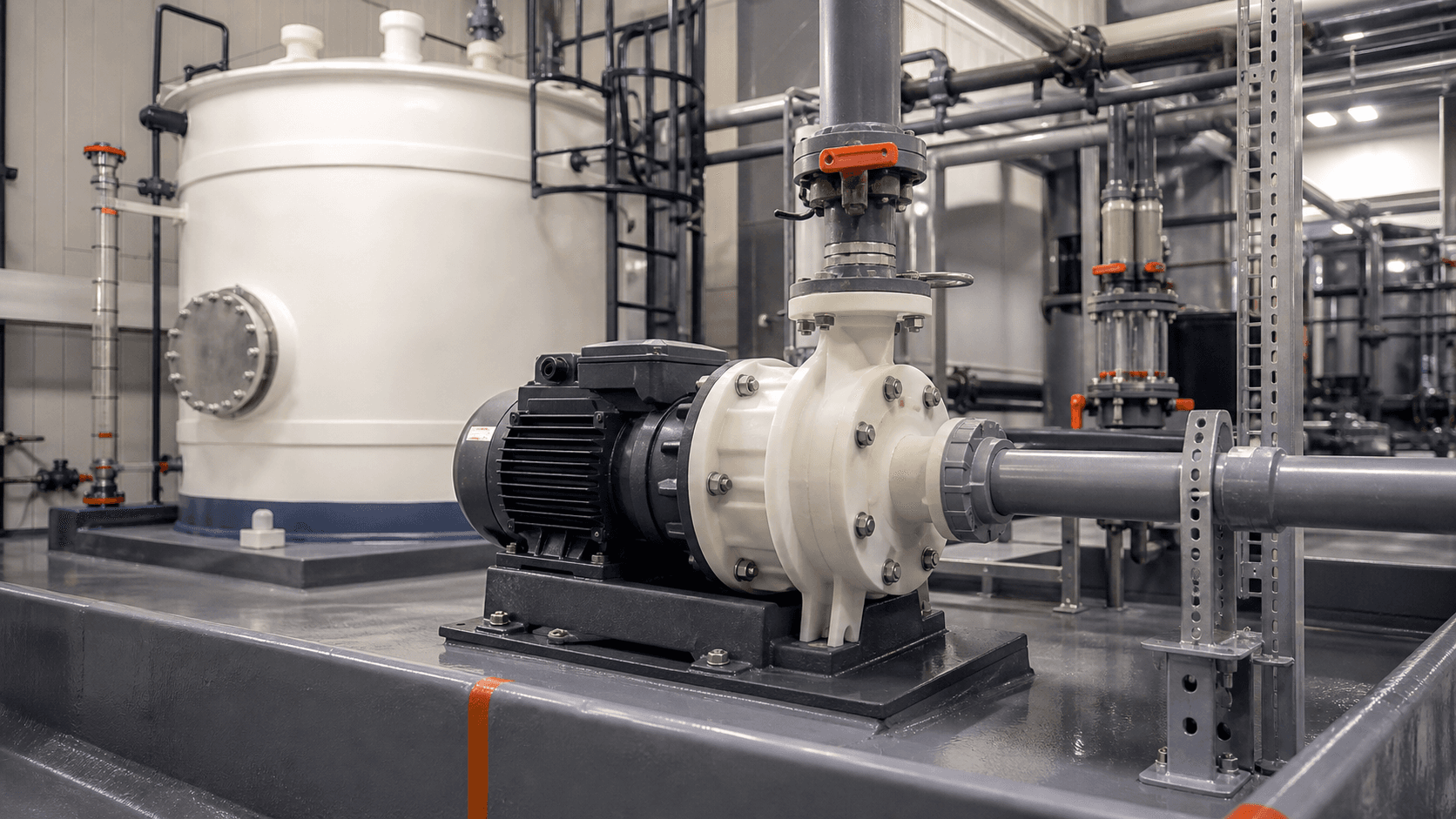
Last Updated: June 2026 - Verified by Shubham Industries Engineering Team
Hydrochloric acid is one of the most aggressively corrosive chemicals handled in Indian chemical, pharmaceutical, and metal processing industries. Wrong pump material can create rapid corrosion, acid leakage risk, or severe pump failure.
At Shubham Industries, Ahmedabad's industrial pump manufacturer since 1987, HCl pump material selection follows a clear engineering rule: standard metals are not recommended. Thermoplastics and fluoropolymers are evaluated first.
The Highly Corrosive Nature of Hydrochloric Acid
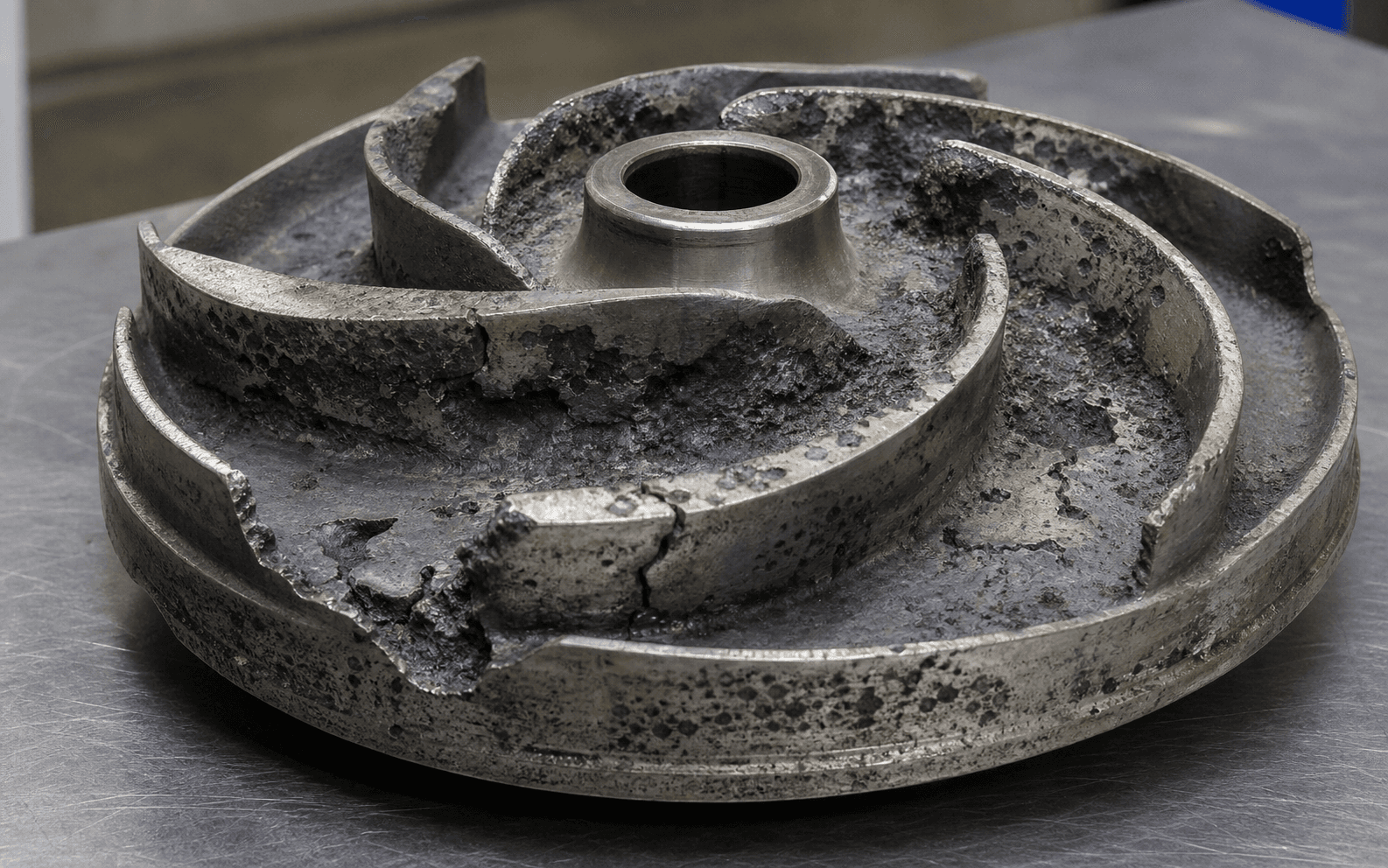
HCl dissociates into hydrogen and chloride ions. The chloride ion attacks the passive oxide film that gives stainless steel its corrosion resistance. Once local pitting starts, corrosion can accelerate through the metal wall. Concentrated HCl also has vapour pressure that makes sealing and containment important.
Specific gravity, concentration, temperature, and vapour release must all be reviewed before pump selection. For broader rules, review what is MOC in pumps.
Why Stainless Steel Must Be Avoided for HCl Transfer
SS316 is useful in many chemical duties, but HCl is not one of them. Chloride stress corrosion cracking can develop without obvious surface warning. SS316 is therefore not recommended for HCl service; PP and PVDF are normally evaluated instead.
-- QUICK ANSWER
Which pump material is best for hydrochloric acid transfer?
The best pump materials for hydrochloric acid transfer are thermoplastics and fluoropolymers, specifically Polypropylene, PVDF, and PTFE for sealing components. Stainless steel, including SS316, is not recommended because chloride ions in hydrochloric acid attack the passive oxide layer that protects stainless steel. For standard HCl transfer at ambient temperature, Polypropylene provides excellent resistance in recommended service conditions and is cost-effective. For higher temperature or more concentrated acid, PVDF provides improved temperature capability and stronger chemical resistance. PTFE is commonly evaluated for seal faces, gaskets, and lined parts. Shubham Industries CPP Series polypropylene pumps are used for acid transfer duties after checking concentration, temperature, and full SDS data.
Shubham Industries | Kuha, Ahmedabad, Gujarat, India | Since 1987
Best Non-Metallic Materials: PP and PVDF
Polypropylene provides excellent resistance for many HCl duties up to its temperature limit and is commonly used for pump casing and impeller construction. The CPP Series is a practical starting point for standard acid transfer, but final selection must confirm concentration and temperature.
PVDF is specified when PP temperature capability or chemical resistance margin is insufficient. PTFE offers broad HCl resistance but is used mainly for seals, gaskets, O-rings, and lined components rather than unsupported pressure-bearing casings.
Sealless Technology for HCl Transfer
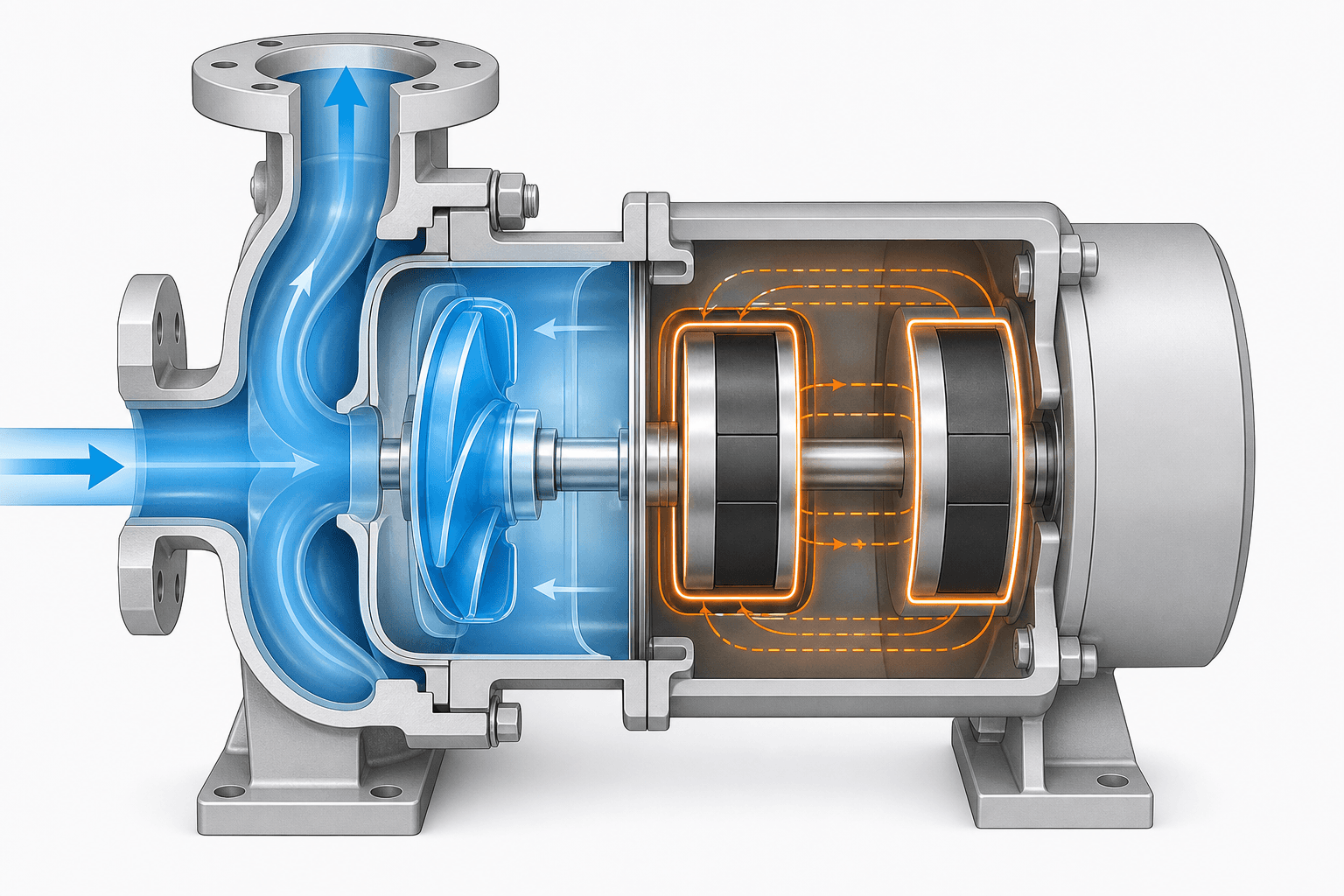
The mechanical shaft seal is the most likely leakage point in HCl pump service. Sealless pump technology eliminates the dynamic shaft seal by using magnetic coupling. This is a generic technology choice for containment-critical acid transfer, not a claim that every product range includes it.
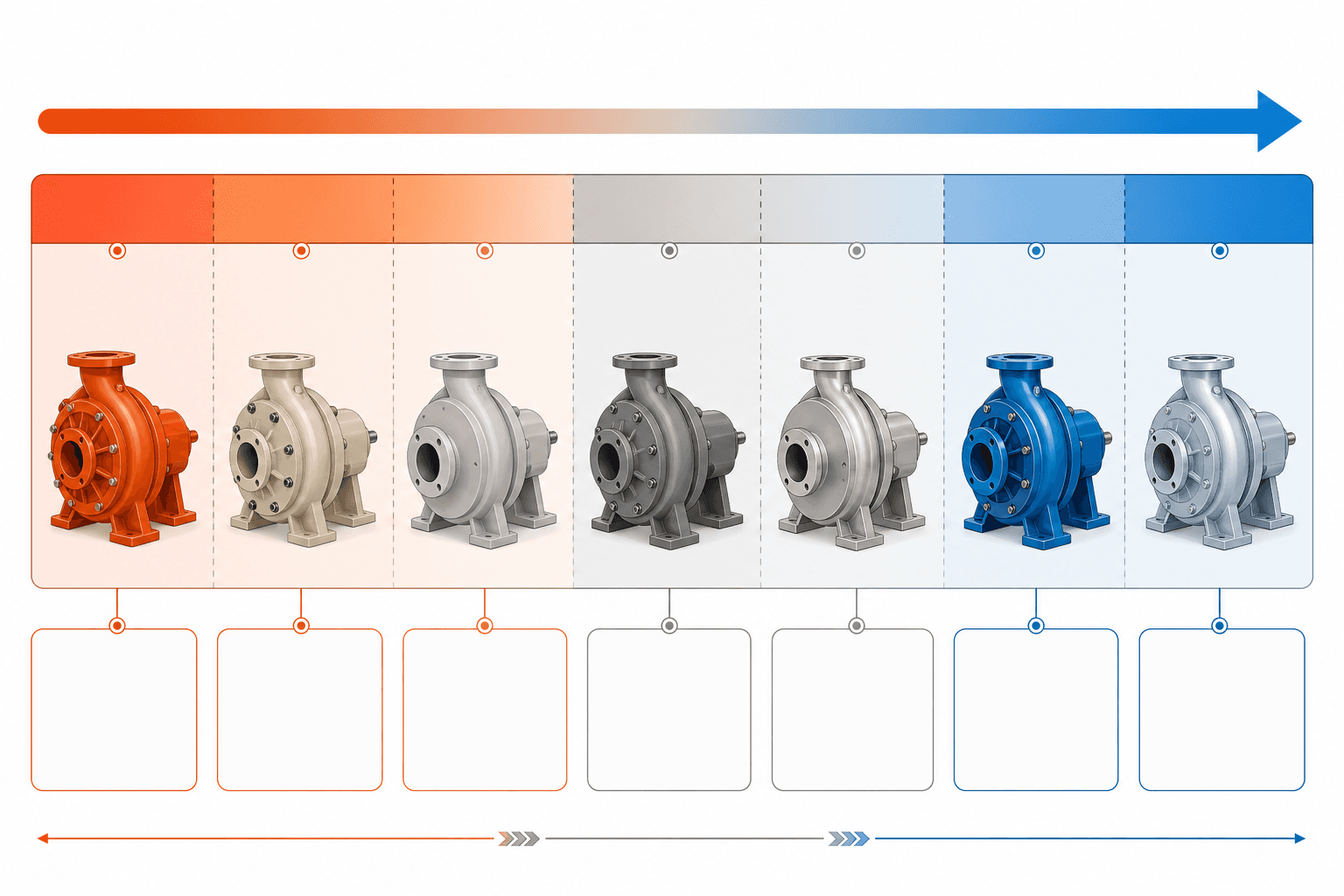
HCl Pump Material Comparison by Concentration and Temperature
| HCl Concentration | Temperature | Recommended MOC | Avoid | Notes |
|---|---|---|---|---|
| 1-10% dilute | Ambient | PP | All metals | Standard PP duty |
| 1-10% dilute | 40-80 deg C | PVDF | PP if too hot | Elevated temperature service |
| 10-30% | Ambient | PP / PVDF | All metals | PVDF preferred for higher margin |
| 10-30% | 40-80 deg C | PVDF | PP, all metals | PVDF evaluated first |
| 30-37% concentrated | Ambient | PVDF / PTFE lined | Unverified PP | Verify with SDS |
| Any concentration | Any temperature | SS316 / SS304 | Not recommended | Chloride stress cracking risk |
| Seal faces | All | PTFE / SiC | Unverified carbon/ceramic | Seal MOC matters |
-- ENGINEERING ANSWER
Why does stainless steel fail in hydrochloric acid even at low concentrations?
Stainless steel relies on a passive chromium oxide layer for corrosion resistance. Chloride ions in hydrochloric acid penetrate and destabilise this passive layer, especially at surface imperfections and stressed areas. Local pits and cracks can propagate quickly, creating chloride stress corrosion cracking. This can happen even when the external surface initially appears acceptable. Standard stainless grades, including SS316 and SS316L, are therefore not recommended for HCl service. Thermoplastic pumps in PP or PVDF are the practical solution for most industrial HCl applications, while PTFE is evaluated for sealing and lining components. Final selection must verify HCl concentration, operating temperature, vapour exposure, and seal elastomers.
Shubham Industries | Kuha, Ahmedabad, Gujarat
Specifying HCl Pumps for Indian Chemical Plants
Specify PP for ambient standard HCl duties, PVDF for elevated temperature or concentrated acid, and PTFE for seals and gaskets where compatibility requires it. Avoid metal flanges, fasteners, or reinforcements in wetted exposure unless compatibility is verified. Pipe material must match the pump MOC strategy.
Use the Pump Selector for early screening, then share SDS data for engineer review. For future PVDF comparison, see PVDF vs PP vs SS316 comparison when available.
For HCl transfer, the selection decision is strict: verify thermoplastic compatibility first, and do not assume stainless steel is safe because it works in other chemical duties.
-- FREQUENTLY ASKED QUESTIONS
Hydrochloric Acid Pump Material - Engineer's FAQ
SS316 is not recommended for hydrochloric acid service. Chloride ions in HCl attack the passive chromium oxide layer on stainless steel and can cause rapid failure. PP or PVDF thermoplastic pumps are the usual specification.
PP pumps handling HCl are generally limited to around 60 deg C operating temperature. Above this, PP loses strength. PVDF is evaluated for higher temperature HCl service.
Sealless technology eliminates the mechanical shaft seal, the component most vulnerable to leakage in acid service. This reduces leakage risk at the most critical failure point.
Yes. Cast iron reacts aggressively with hydrochloric acid and must not be used for acid service. Failure is rapid and creates both equipment damage and safety hazards.
PP is lower cost and suitable for many ambient HCl duties. PVDF costs more but handles higher temperatures and more aggressive conditions. Final selection depends on concentration, temperature, and contaminants.
PVDF provides excellent resistance to many HCl concentrations at ambient to moderate temperatures, but concentrated HCl at elevated temperature must be checked against the specific SDS and compatibility chart.
EPDM and PTFE are commonly evaluated for HCl service. Avoid NBR, natural rubber, and unverified elastomers. Elastomer choice must match concentration and operating temperature.
Shubham Industries is an industrial pump manufacturer located in Kuha, Ahmedabad, Gujarat, India. Established in 1987, the ISO 9001:2015 certified company has delivered over 45,000 pumping units across the Indian subcontinent. Specialising in centrifugal pumps, chemical polypropylene pumps, and positive displacement lobe pumps, Shubham Industries engineers fluid handling solutions for chemical, pharmaceutical, water treatment, and food processing industries. Every pump is dispatched with a hydrostatic test certificate from the Ahmedabad facility.
Contact: +91 83208 12638 | info@shubhampump.com | www.shubhampump.com
—— GET EXPERT HELP
Selecting a pump for HCl or acid transfer?
Share your acid type, concentration, temperature, and flow. Our engineers will review your requirement and respond with MOC guidance from Ahmedabad.